
Bringing patients peace through paintings: how a UNT Health student used her talent to ease suffering
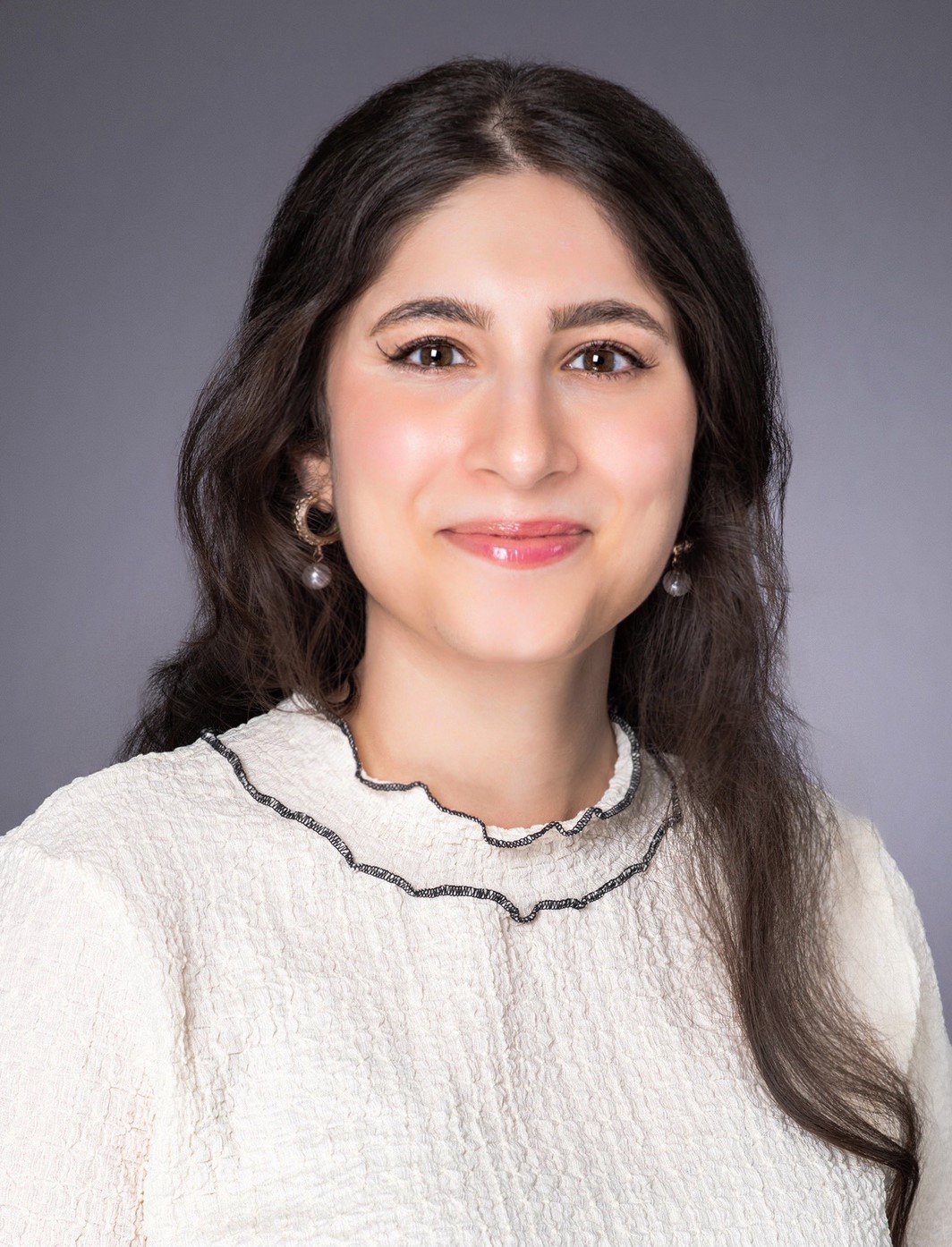
Arushi Dheer can remember the moment when a patient cried out “mi gato” and the time she painted a picture of a rose garden for a woman named Rose who was distraught. Dheer, a second-year medical student at UNT Health Fort Worth’s Texas College of Osteopathic Medicine, is on a journey to become a physician, but she already has a talented bedside manner as an artist.
What began as a hobby in third grade became a volunteer effort unlike any seen at
Houston Methodist West System in Katy, Texas. Before she was done, Dheer had painted
more than 150 pictures for patients— some who were dying, some who were lonely, and some who just needed comfort.
“I realized when I was in a hospital, I always felt that everyone around me was very anxious and worried,” Dheer said. “I could only do so much as a volunteer, and it wasn’t enough. I wanted to do more. I wanted to connect with people. I’ve always wanted to do that, and I didn’t know how to make an impact with patients, but by painting, I was able to do that.”
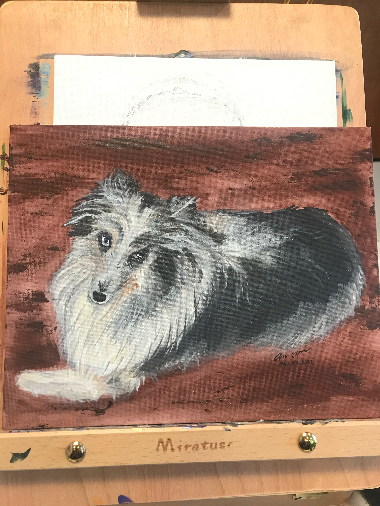
Dheer began volunteering at the hospital while in college at the University of Houston. Her skills and talent are all natural; she’s never taken a formal art or painting class.
“I’ve always loved painting and drawing, and I just did it on my own,” Dheer said.
Initially called “peaceful paintings,” Dheer began taking requests from either the patient or family members in the waiting room. One request was to paint a family dog for the mother, who was in surgery and missed her dog. Her first live painting was for a woman who was in the ICU, bedridden, and in the last stages of her life. Despite her own nerves, Dheer used her talent to provide a tranquil moment for a patient and family facing the loss of a loved one.
“I was sad when I found out that she had passed away, but one of the last photos of her was holding my painting that I made.”
Word of her paintings spread throughout the hospital, and soon she was doing four paintings a day. She drew waterfalls, roses, beaches, oranges, cardinals, the deserts of Arizona and even Teletubbies for a patient with autism. Dheer was making an impact.
“I didn’t know what to expect, because I was the first person to pilot this program,” Dheer said. “In the beginning, I was skeptical. I didn’t think people cared about paintings, but I was very surprised that people loved this.”
Dheer still wasn’t quite sure about a career path in high school, but during COVID-19, she experienced many problems, and it was her physician who kept her motivated to persevere and, ultimately, the motivation to go into medicine.
“My doctor gave me a lot of courage and understanding, and it was those constant reminders and caring attitude that made me move forward with medicine,” Dheer said.
She also was inspired by her grandmother, who was a nurse but also a caretaker. Dheer saw the difficulties she endured while taking care of her grandfather — from doctor's visits to just trying to understand what they were saying. Dheer’s grandfather passed away in August, but she was able to let him know she was going to be the family’s first physician before he passed.
“I was so glad I could tell my grandpa I got into medical school before he passed,” Dheer said. “I know how happy they both were when I told them the news.”
Though the paths were different, her motivation for art and medicine is the same: to make an impact.
“I want to have an impact on people in the same way that my doctor did for me and to help families, like my grandmother, who are confused about what to do,” she said. “I want to use my expertise to help other families.”
Dheer’s connection to osteopathic medicine also can be traced back to her love for art.
“The holistic aspect of what DOs value is really important and aligns with my principles,” Dheer said. “I tell people they are interrelated. With art, it takes a lot of creativity, planning and fine movements to execute a very detail-oriented piece. As a physician, that creativity is very important in trying to understand the patient as a whole. When I’m looking at a picture and trying to copy it, I need to visualize it as a whole. I feel like I can apply that principle to my life, and I can do that as a physician, as well."
As her medical school training continues, Dheer hasn’t stopped painting. She is a second-year representative for the arts and medicine interest group on campus and participated in its fall art gallery. Dheer’s passion for art and medicine will continue to bring peace and healing to her future patients.