
Dr. Malinee Neelamegam receives national epidemiology award from the Society for Epidemiologic Research
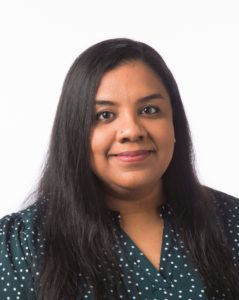 Malinee Neelamegam, PhD, assistant professor in the College of Public Health at UNT Health Fort Worth, has
been named the 2026 recipient of the Society for Epidemiologic Research’s Sherman
A. James Diverse and Inclusive Epidemiology Award. The national award recognizes an
individual whose research, teaching or service has expanded the field of epidemiology
to better include underrepresented or disadvantaged populations and advanced greater
diversity and inclusiveness in the discipline.
Malinee Neelamegam, PhD, assistant professor in the College of Public Health at UNT Health Fort Worth, has
been named the 2026 recipient of the Society for Epidemiologic Research’s Sherman
A. James Diverse and Inclusive Epidemiology Award. The national award recognizes an
individual whose research, teaching or service has expanded the field of epidemiology
to better include underrepresented or disadvantaged populations and advanced greater
diversity and inclusiveness in the discipline.
For Dr. Neelamegam, the recognition reflects a career centered on asking who is left out of research, care and public health systems and how epidemiology can help change that. Her research focuses on understanding aging and chronic disease management in communities that face health disparities. At UNT Health, she has built a distinctive program of work examining how social and structural conditions shape health as people age, particularly among immigrant communities and people living with HIV. Her scholarship is helping illuminate areas of aging research that have long remained understudied.
Among the most distinctive aspects of her work is her leadership in South Asian-focused aging research, an area that remains rare in the United States. Through community-engaged studies, Dr. Neelamegam is generating urgently needed evidence on aging, dementia awareness and chronic disease prevention in South Asian communities. She also leads a Texas Community Engagement Alliance study uniquely positioned at the national level in contributing data from South Asian populations, helping to ensure this rapidly growing community is represented in national conversations on public health research and inclusion.
Neelamegam’s work also extends to people living with HIV, where she studies aging, chronic disease burden and the challenges of managing health across the life course. By focusing on older adults living and aging with HIV, her research addresses a population too often overlooked in aging science, while bringing attention to the realities of multimorbidity, long-term care needs and quality of life.
Her commitment to inclusion also shapes her work in the classroom. In the College of Public Health’s Principles of Epidemiology course, Neelamegam worked extensively to make epidemiology more accessible to a wide range of learners by designing course content that supports different learning styles and reduces barriers to engagement. Beyond research and teaching, Neelamegam has also created spaces that expand who can participate in knowledge creation. Last year, she launched a writing lab that brought community partners into academic spaces not as guests, but as co-writers and co-creators. The initiative was intentionally designed to support faculty, students, staff and community members in developing writing projects together, while challenging traditional academic models that often exclude community voices from dissemination.
Her service leadership reflects the same values. Neelamegam serves as caucus director for the Asian & Pacific Islander Caucus of the American Public Health Association and is also a member of the executive board of the South Asian Public Health Association. Across these roles, she has consistently championed visibility, representation and stronger public health infrastructure for historically underrepresented communities.
“This award is deeply meaningful to me because it affirms the kind of epidemiology I believe in, one that is rigorous, community-centered and intentional about whose lives and experiences are represented in research,” Neelamegam said. “My work has always been guided by the belief that communities facing health disparities deserve to be seen, heard and meaningfully included in the science that shapes policy, care and opportunity. I am honored to receive this recognition, and I share it with the community partners, students and collaborators who make this work possible.”
Neelamegam was selected from a competitive pool of nominees and will be honored at SER’s 2026 annual meeting in Phoenix, Arizona, where she was invited to deliver a plenary talk.