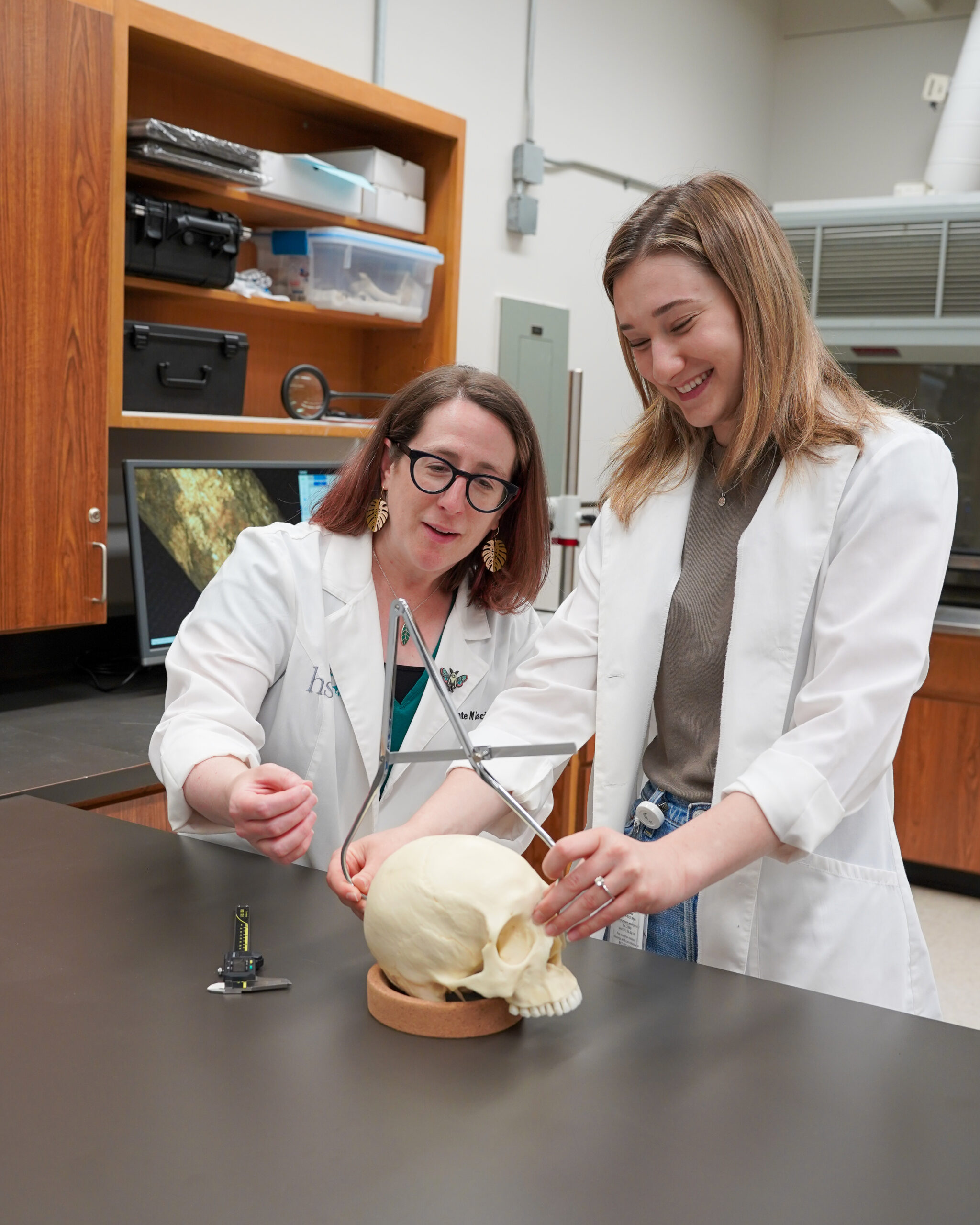
 With support from a $2 million collaborative grant from the National Institute of
Justice, researchers from UNT Health Fort Worth are using artificial intelligence
and machine learning to develop new software to help forensic anthropologists accurately
identify human remains.
With support from a $2 million collaborative grant from the National Institute of
Justice, researchers from UNT Health Fort Worth are using artificial intelligence
and machine learning to develop new software to help forensic anthropologists accurately
identify human remains.
The project, titled “MOSAIC: Unifying Methods of Sex, Stature, Affinity & Age for Identification through
Computational Standardization,” plans to standardize and streamline the process of creating a biological profile—a
critical tool forensic anthropologists use to narrow the potential identity of a deceased
individual by estimating the person’s age at death, ancestry (or population affinity),
sex and stature from skeletal remains.
With current tools and methods, forensic anthropologists typically estimate each of
those parameters without considering how they might interact with each other.
“Currently, there aren’t any programs that analyze all four of the biological profile
parameters together. Even though we’ve known for a long time that there is a lot of
interaction between them, our methods still estimate those parameters individually,”
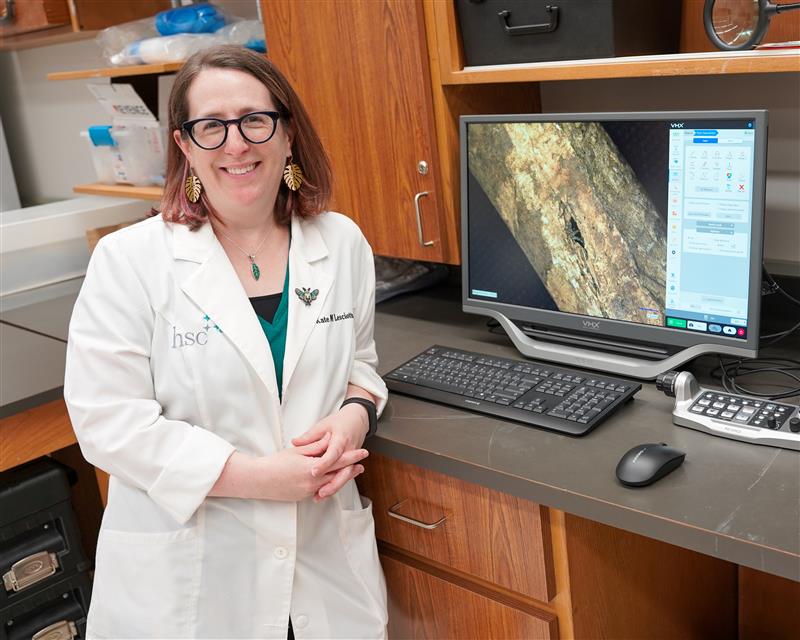
said Kate Lesciotto, Ph.D., assistant professor of anatomy at UNT Health’s College
of Biomedical and Translational Sciences and one of the primary investigators on the
project.
“MOSAIC takes a new approach by not compartmentalizing data or making assumptions
about whether a piece of data will be used only for age estimation or only to calculate
stature,” she said.
To develop the new tool, Lesciotto will join research teams from Michigan State University,
Washburn University, Texas State University and the University of New Mexico to gather
skeletal measurements and morphological data from collections in the United States
and Mexico.
“We want to collect data from modern documented collections where people have donated
their remains,” Lesciotto said. “Their known demographic data will provide the ground
truth for our research.”
 By employing AI and machine learning to analyze the hundreds of data points gathered
from each individual in the study, the team will better understand how the four key
biological profile parameters interact and influence accurate estimations.
By employing AI and machine learning to analyze the hundreds of data points gathered
from each individual in the study, the team will better understand how the four key
biological profile parameters interact and influence accurate estimations.
“No one has ever created a matched dataset of this magnitude encompassing both metric
and morphological data,” Lesciotto said.
Once completed, the MOSAIC software will be available for free to law enforcement
and forensic anthropologists. The software will compare data collected by investigators
with a reference database to generate comprehensive and standardized biological profiles.
Although the project brings together forensic experts from across the country, some
of the initial planning began at UNT Health with support from a seed grant provided
by the Department of Physiology and Anatomy in the College of Biomedical and Translational
Sciences.
“The MOSAIC project is a perfect example of how a seed grant can turn a small investment
in an innovative idea into a much larger project that will have a real impact in the
world,” said Johnathan Tune, Ph.D., assistant dean for research and chair of the Department
of Physiology and Anatomy.
“On top of that, this project will provide outstanding real-world research experiences
for students in Dr. Lesciotto’s lab—it’s a real win-win for the college and UNT Health,”
Tune said.
With the project underway, Lesciotto and the research team are keeping the end goal
in focus: reducing the number of unidentified individuals.
“NamUs—The National Missing and Unidentified Persons System—lists thousands of cases
across the United States with unidentified remains,” Lesciotto said. “The whole idea
behind this project is that we can bring that number down—help get some of those people
identified and, in some cases, help law enforcement and families find answers to their
questions.”