
Desk Job Pain? How OMT Can Help
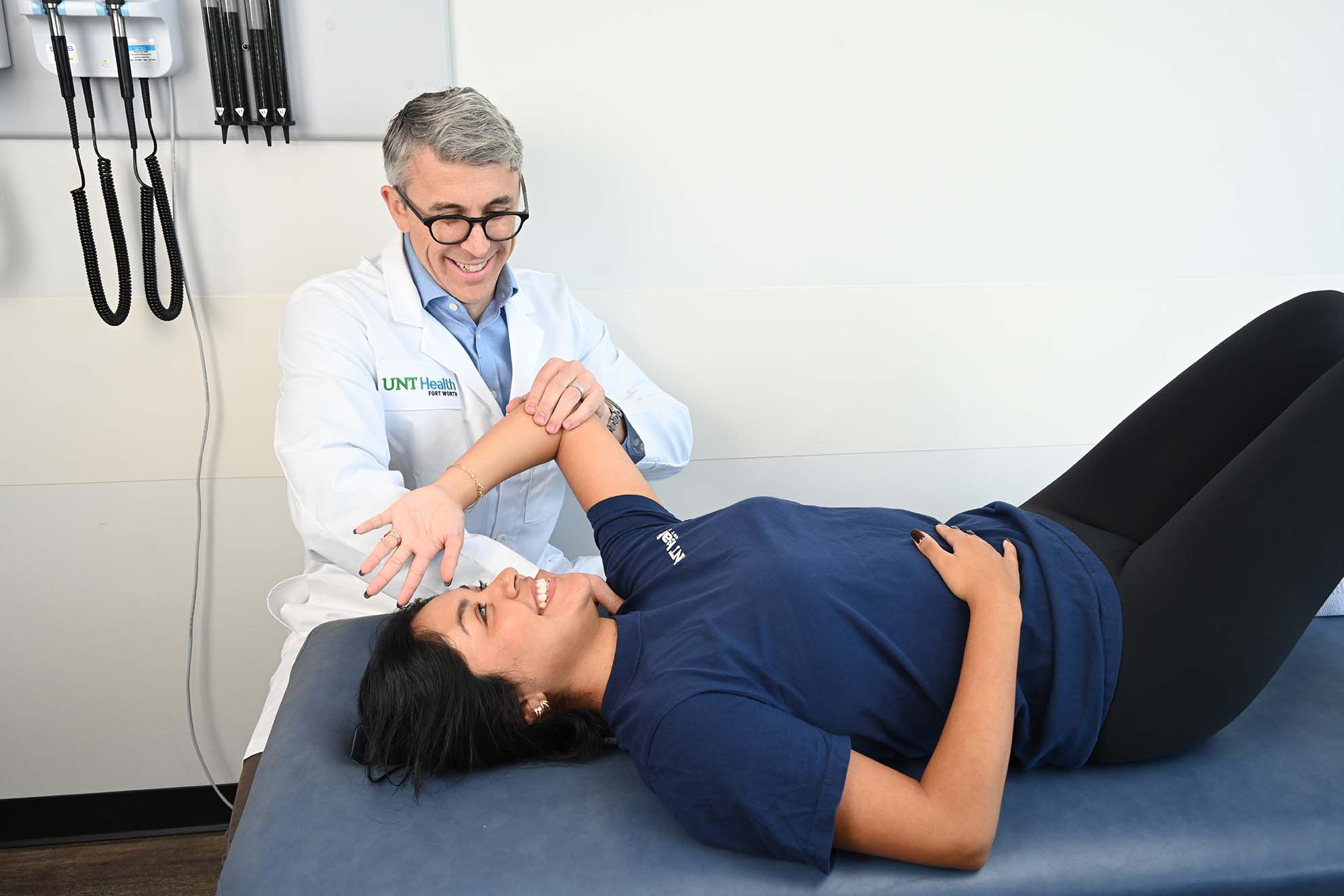
Dr. Ryan Seals performs OMT on a patient's arm.
If your job keeps you glued to a screen for hours, you’re not alone. If poor posture, uncomfortable office chairs, and a sedentary work environment are giving you back pain, it may be time to take a more hands-on approach to your health.
Osteopathic manipulative medicine (OMM) is a lesser-known but highly effective approach to eliminating pain and discomfort. OMM does not use medication, but instead treats your muscles and joints using techniques including stretching, gentle pressure and resistance.
Osteopathic manipulative medicine (OMM) is a whole-person approach to health that looks beyond symptoms to understand how your muscles, joints, nerves and overall lifestyle work together. Doctors trained in Osteopathic neuromusculoskeletal medicine (ONMM) use the latest medical science alongside hands-on treatment such as osteopathic manipulative therapy to care for pain, movement problems and other conditions that affect daily life. This means your treatment plan may include gentle manual techniques, guidance on posture or movement, and coordination with other medical care. The goal is not just to relieve discomfort, but to help restore balance, function and long-term wellness.
Click here to read more about the diverse areas OMM can treat.
What is OMT?
Osteopathic manipulative treatment (OMT) uses gentle, hands-on techniques to help
ease pain, improve mobility, and support the body’s natural ability to heal. These
treatments may involve stretching, light pressure, or guided movements that target
muscles, joints, and connective tissues. OMT is always tailored to your specific needs
and can be used on its own or alongside other medical treatments to support recovery,
function, and overall well-being.
Osteopathic manipulation is performed by highly-trained and board-certified physicians,
not chiropractors.
How desk jobs affect your body
Sitting in meetings and at your computer for prolonged periods can create:
-
Neck stiffness or arthritis
-
Lower back pain
-
Shoulder tightness
-
Tension headaches
-
Hip immobility and pain
These are functional issues that can be treated with OMT. Many patients leave their
appointment feeling some, if not total, immediate relief.
In addition to in-office visits, our OMM physicians provide personalized care plans
and educate patients on stretches, posture changes, lifestyle changes or manipulation
they can perform at work or at home for pain relief.
How does OMT support posture and pain relief?
OMT can relieve not only tension in large muscle groups like the back, but also in small-muscle groups like the wrist and fingers from repetitive motions like typing or clicking. Here are a few ways OMT corrects desk-pain:
-
Improves alignment of the back and hips
-
Increases mobility
-
Releases muscle tension caused by poor posture
-
Enhances circulation to reduce inflammation, swelling, and fatigue
-
Re-trains the body to hold better posture naturally
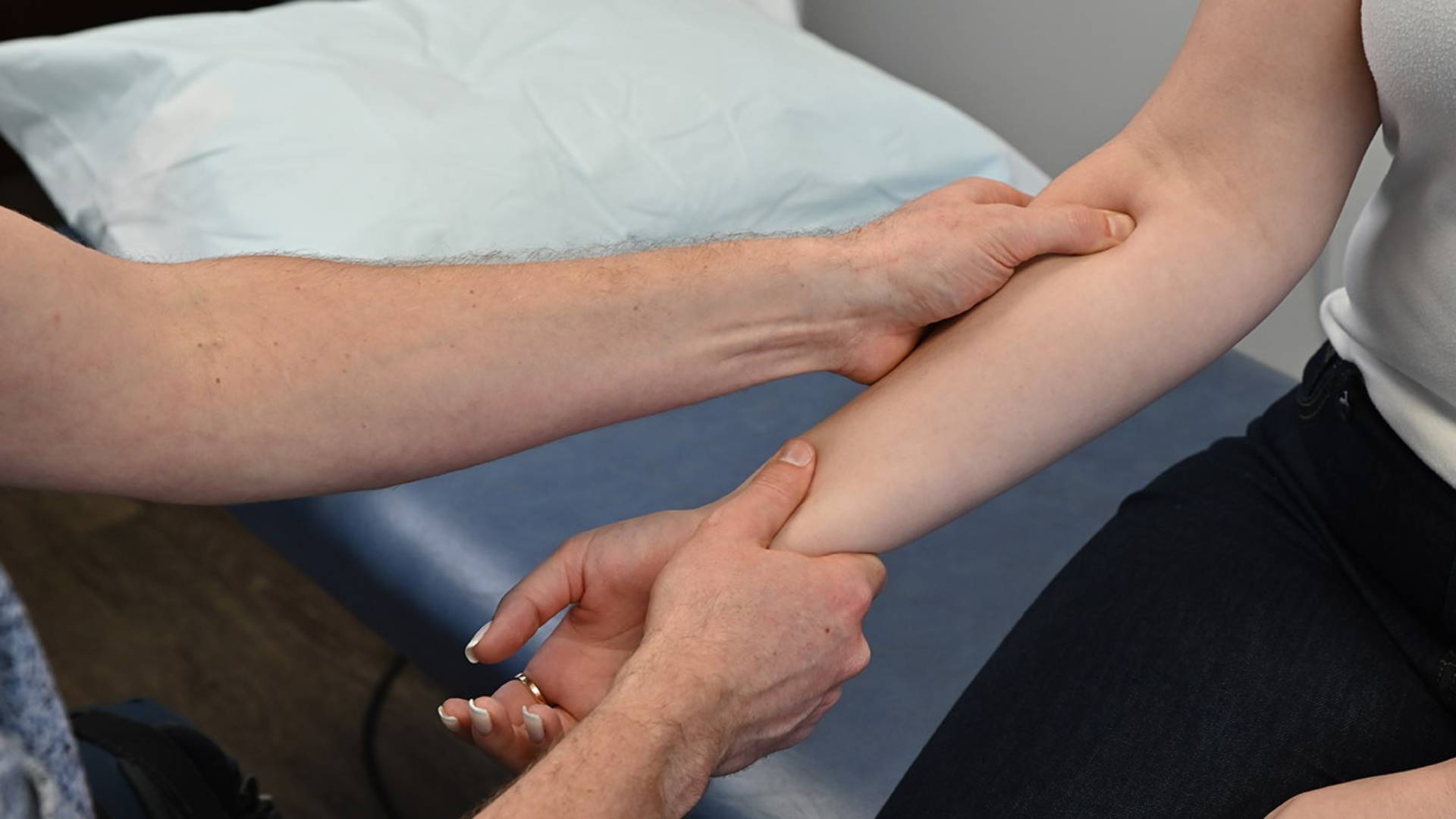
A patient receives OMT for their wrist pain.
What to expect from an OMM visit for desk-related pain
An initial visit will include a medical history review and discussion of symptoms. A hands-on evaluation will give the OMM specialists a better understanding of your condition. If needed, gentle manipulative techniques could be used too. This will depend on your diagnosis. It is best to wear active wear to your appointment so you are comfortable during stretches.
Treatment plans may include exercises you can do at home, posture advice to practice during the week, or lifestyle modification.
OMT vs. chiropractic care for posture problems
-
OMM specialists complete medical school and specialized OMM training during residency or after completing residency training.
-
The osteopathic philosophy focuses on whole body care, considering how every system in the body affect one another
-
OMM goes beyond one-size-fits-all adjustment techniques to get to the root causes of pain
-
OMT is gentle manipulation, without aggressive cracking or popping
Why choose our OMM specialists
UNT Health Clinical Practice Group is a part of UNT Health Fort Worth, which also houses one of the leading osteopathic medical schools in the nation, the Texas College of Osteopathic Medicine (TCOM). Our clinicians not only provide patient care, but also teach with TCOM, keeping their medical knowledge and training up-to-date.
Each treatment plan is highly-customized to the patient and comprehensive. Often your treatment will include multi-disciplinary working with physical therapy, occupational therapy or other physician specialists. For many of the neuromusculoskeletal conditions, OMM physicians can provide comprehensive treatment plan (including the latest medical and procedural options). Also, the OMM clinic will work with other specialists within the practice (GI, cardiology, geriatrics, pediatrics, dermatology, family medicine) for compressive and multidisciplinary care.
Patients of all ages and demographics can trust UNT Health when looking for OMT treatment in Fort Worth.
When to consider OMT for work-related pain
It may be time to seek help if you’re experiencing:
-
Persistent neck or back discomfort or pain
-
Hand and forearm discomfort or pain
-
Trouble sitting for long periods
-
Pain that worsens throughout the workday
-
Headaches triggered by tension
-
Feeling “stiff” all the time
For a natural, physician-led solution to modern day work pain, schedule a consultation with an OMM specialist. Call 817-735-2235 or request an appointment online.