February 18, 2025 • REAP News
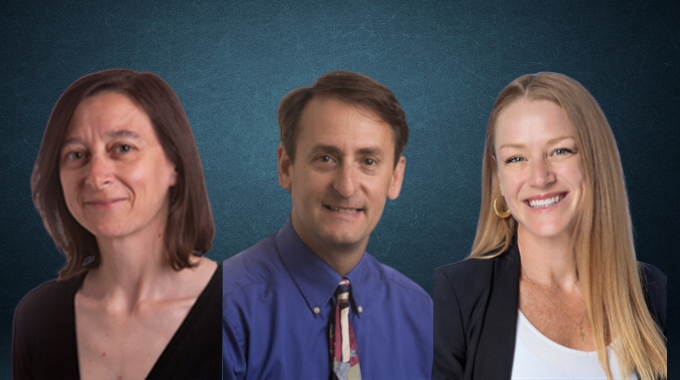 |
Nathalie Sumien, Ph.D.
Recipient of the New Investigator Award
Co-Investigators: Derek Schreihofer, Ph.D. and Nicole Phillips, Ph.D.
“Exploration of epigenetic links between repetitive head injury and Alzheimer’s
disease”
Bio: Dr. Nathalie Sumien is a Professor in Pharmacology & Neuroscience. Her scientific
interest has focused on longitudinal and cross-sequential studies examining interventions
to reverse cognitive and motor declines associated with aging and neurodegenerative
diseases. Our work has spanned from examining the interaction between antioxidant
supplementation and exercise as anti-aging interventions. Our current research focused
on the use of hyperbaric oxygen therapy to alleviate functional declines associated
with Alzheimer’s disease, chemotherapy treatment or aging. Identifying successful
interventions and their interaction with factors such as genes and gender will lead
to specialized recommendations to patients. Furthermore, it will allow us to determine
specific mechanisms involved in positive outcomes leading to the development of therapeutic
methods to ultimately improve health span of individuals.
Dr. Derek Schreihofer is an Associate Professor in Pharmacology & Neuroscience. His
laboratory is interested in identifying treatments for brain injury resulting from
stroke, traumatic brain injury, Alzheimer Disease, and metabolic syndrome. We are
particularly interested in identifying early points of intervention to reduce or prevent
progression of disease. Previous studies have focused on steroid hormones and plant
estrogens and current projects are focused on using novel compounds to protect and
regenerate brain tissue after stroke and traumatic brain injury.
Dr. Nicole Phillips is an Associate Professor in Microbiology, Immunology and Genetics.
She serves as the Project Lead for the Genomics Core in the Institute of Translational
Research (ITR) Her research program has several areas of focus, including application
of multi-omics methods to further our understanding of the biological sources of health
disparities in complex age-related diseases, such as Alzheimer’s Disease; Studies
of mitochondrial DNA and mitochondrial function, in the context of various disease
states such as Alzheimer’s disease, type 2 diabetes, and preeclampsia.
Current Project: Leveraging their individual expertise, Drs. Sumien, Phillips and Schreihofer are
collaborating on this project to test the hypothesis that progressive neurological
dysfunction from repeated mild TBI shares biological signatures with MCI and ADRD.
We expect to identify potential biomarkers and interventional targets for reducing
the effect of head injury on the development of neurological dysfunction. We will
be focusing on epigenetic changes in neuronal and glial-derived circulating exosomal
microRNAs (miRNAs) that can coordinate cellular gene expression profiles. Results
of these studies will determine whether rmTBI typical of contact sports shares significant
epigenetic signatures with cognitive dysfunction in humans, and whether these epigenetic
changes can serve as biomarkers and/or potential targets for intervention.
|
 |
Stephen Mathew, PhD
Recipient of the New Investigator Award
“Development of humanized anti-LLT1 targeted immunotherapy for hepatocellular
carcinoma”
Bio: Dr. Stephen Mathew is an Associate Professor in the Dept. of Microbiology, Immunology
& Genetics in the College of Biomedical and Translational Sciences (CBTS). He also
serves as the Graduate Advisor for Biochemistry & Cancer Biology discipline, Vice
Chair, Institutional Animal Care and Use Committee (IACUC), CBTS representative, UNT
HealthInter-Professional Education committee and Faculty Advisor, International Students
Association. Dr. Mathew is originally from India where he received his MS and PhD
in Microbiology from R. D. University, Jabalpur, India and worked in the pharmaceutical
industry as Manager, Clinical Research for some time. His strong interest in bench
research brought him to Science Center, Fort Worth as a Post-Doctoral researcher in
2002. He has a broad background in microbiology, molecular biology and immunology
and conducts research in cancer immunology. The overarching goal of his research focuses
on deciphering the role of natural killer (NK) cell receptor-ligand interactions in
different disease models. His research group has studied the signaling mechanisms,
expression, and function of NK cells in cancers like prostate, triple negative breast
cancer, Ewing sarcoma and leukemia. He has successfully trained several graduate students
in his laboratory. His research has been supported by grants from NIH-NCMHD, NIH-NINDS,
and private foundations. Current Project: Dr. Mathew and his research team have previously developed a mouse anti-human LLT1
monoclonal antibody (mAb) that targets prostate cancer and triple negative breast
cancer to be killed by NK cells. This technology received a US patent titled “Compositions
and methods for activation of NK cell killing of prostate cancer and breast cancer
cells by anti-human LLT1 mAb”. The critical next step in translating these findings
into LLT1 targeted immunotherapy is to develop a humanized anti-LLT1 mAb and evaluate
its expression and function in vitro and in vivo studies. The goal of the current project is to develop a humanized anti-LLT1 mAb
and conduct preliminary in vitro testing to determine its efficacy as a novel immune checkpoint inhibitor immunotherapy
for hepatocellular carcinoma (HCC). With this pilot data we plan to apply for an NIH
RO1 grant to test the safety and efficacy of the humanized anti-LLT1 mAb either as
a single agent or a combinatorial therapy with other immune checkpoint inhibitors
in HCC organoid or animal models
|
