NorTex 2014 Spring Newsletter
March 22, 2014 • NorTex
The North Texas Primary Care Research Network Newsletter
BENEFITS OF PARTICIPATING IN RESEARCH
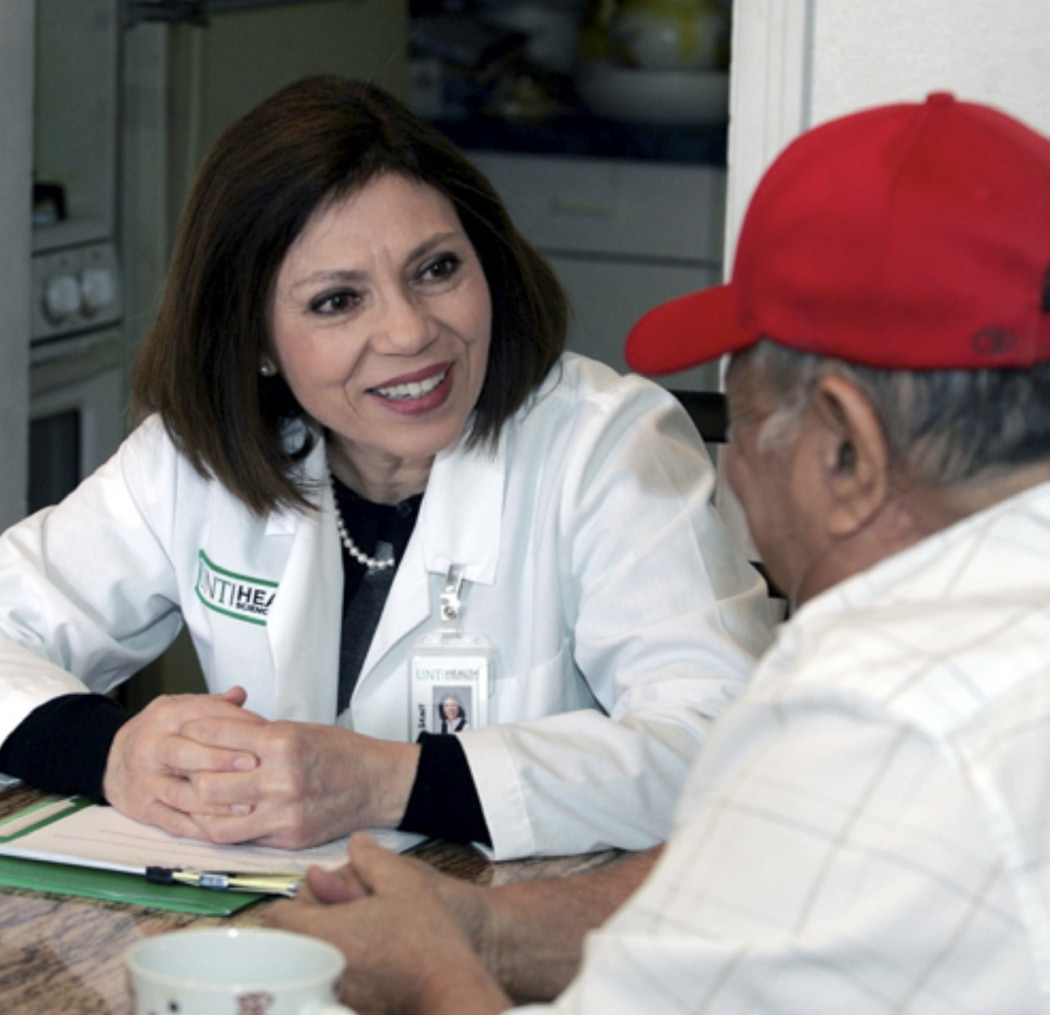
The use of medical technology in research settings and the discovery of clinically relevant incidental findings have generated debate about how to balance the risks of potential harm from using the technology, how to handle incidental findings, and how to define the responsibility of the researchers. For example, the benefits of using CT scans in medical settings must be balanced with the risks of radiation exposure. Similarly, in research settings where participants may be exposed to radiation for non-medical purposes, the risks of using CT scans must be properly conveyed to participants. NorTex researchers recruited a sample of 571 participants into the North Texas Healthy Heart (NTHH) Study (PI: R. Cardarelli) to investigate disparities in cardiovascular health outcomes, specifically as they relate to coronary calcium scores and CT scan findings. Participants were eligible for the study if they reported no history of cardiovascular disease, renal failure, or liver failure. Participants completed a 16-slice CT scan of the heart and abdomen. Of 571 study participants, 510 completed a CT scan. A total of 246 clinically significant findings (defined as CT scan findings that yielded diagnoses with a definite course of treatment or management) were identified in 169 asymptomatic participants. Common findings included osteoarthritis, hernia, fatty infiltration of the liver, diverticulosis, ectasia of the aorta, and nephrolithiasis. Findings also resulted in follow-up physician visits and diagnoses of conditions such as lung cancer and leukemia as well as placements of stents and a hysterectomy. The consent process in research settings plays an important role in conveying the risks and benefits of clinical tests provided during the course of study procedures, particularly in addressing the difference between participating in research and testing provided for clinical care purposes. The continued development of protocols for the handling of incidental findings in research and the establishment of guidelines are needed to ensure that research procedures mirror the best interests of participants. A manuscript discussing these findings has been accepted for publication in the Journal of the American Board of Family Medicine.
Authors: Anna Espinoza, MD; Kendra Malone, MPH; Elizabeth Balyakina, MS, MPH; Kimberly Fulda, DrPH; Roberto Cardarelli, DO, MPH
NORTEX RESEARCH PROJECTS
FEATURED CURRENT NORTEX PROJECT
Family Medicine Residents Working to Improve Childhood Obesity Prevention through Community-Oriented Primary Care
Residents of UNT Health/TCOM-Plaza Medical Center of Forth Worth are engaging children at risk for obesity in their program, “Bridging the Gap in Obesity Prevention through Community-Oriented Primary Care,” under the supervision of residency co-directors Dr. Jon Sivoravong and Dr. Philip Hudson, along with Dr. Susan Franks, clinical health psychologist. This program has been implemented as part of the residents’ education to better serve the patient population of the Seminary Family Medicine Clinic and improve the skills of primary care physicians to prevent and treat childhood obesity. The program has three major goals. The first is to add a structured resident education program to enhance knowledge about healthy eating, physical activity, emotional well-being, the family system, motivational interviewing and principles for community engagement. The second goal is for residents to co-lead group medical visits for children and their parents, encouraging positive health behaviors and increasing fitness. The funding agency, The American Academy of Family Physicians (AAFP), funded by MetLife, provided educational materials through the Americans in Motion- Healthy Interventions (AIM-HI) and Ready, Set, FIT!, which will be utilized for the educational component of the program. The goal of AIM-HI is for family physicians and their teams to play an active role in encouraging patients to lead healthy lives through increased fitness, defined as physical activity, healthy eating, and emotional wellbeing. The last goal of the program is for residents to complete community engagement service projects to disseminate health-related information at community talks. The funded portion of the program will be completed by the end of July 2014.
FEATURED COMPLETED NORTEX PROJECT
Vitamin D and Hypertension: Racial/Ethnic Disparities
Tasleyma Sattar, DO, and NorTex staff examined the relationship between Vitamin D levels and hypertension status and whether this relationship differed by race/ethnicity. Disparities in Vitamin D deficiency and insufficiency are observed by age and race/ethnicity, and Vitamin D deficiency is associated with negative clinical outcomes such as cardiovascular disease. Racial/Ethnic minorities also experience disparities with chronic conditions associated with Vitamin D deficiencies such as hypertension. Investigators analyzed plasma samples collected from 115 Caucasian and 115 African American participants from the North Texas Healthy Heart Study (PI: R. Cardarelli). These participants were 45 years of age and older and had no known cardiovascular disease. Plasma concentration levels of 25-hydroxy Vitamin D were dichotomized into ≤ 20.99 (deficient) and ≥ 21.00 (sufficient). Participants were categorized as hypertensive or not based on the average of two blood pressure readings, having a diagnosis of hypertension, or taking medication for hypertension. Overall, 69.4 percent of participants had deficient Vitamin D levels (82.6 percent of African Americans versus 56.5 percent Caucasians). Compared to Caucasians, African Americans also had a higher percentage of hypertension (60.0 percent versus 53.9 percent). No association was observed between Vitamin D and hypertension overall or by race/ethnicity. The small sample size may have contributed to the lack of significant findings. This research was funded by the Texas Academy of Family Physicians Foundation (PI: T. Sattar).
BECOME A NORTEX MEMBER
Thank you for your contributions to NorTex! Our success is measured by the number of community partners in NorTex, our commitment to research reflecting the interests and needs of these partners, and the translation of this research in primary care practice. Our goal is to improve the health of our communities. NorTex’s partners include UNT Health Fort Worth, Tarrant County Public Health, Cook Children’s Health Care System Neighborhood Clinics, John Peter Smith Health Network Community Health Centers, Parkland Health and Hospital System Community Oriented Primary Care Centers, and private practices in Texas, including rural locations. NorTex members include physicians, midlevel providers, nurses and non-clinician researchers. NorTex membership benefits include having the opportunity to participate in primary care research, making a difference in the community, and receiving CME for network-related activities. If you would like information about becoming a member of NorTex or participating in a NorTex research project, please e-mail Dr. Kim Fulda, Interim Director, at Kimberly.Fulda@unthealth.edu or at NorTex@unthealth.edu; or Dr. Anna Espinoza at Anna.Espinoza@unthealth.edu. We look forward to working with each of you!
UNITED WAY'S LIVE WELL HEALTH INITIATIVE
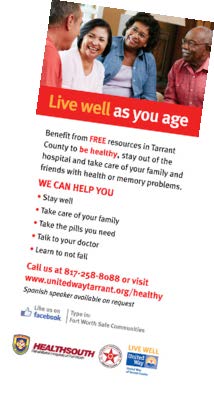
United Way of Tarrant County and its Area Agency on Aging partner with many local organizations to provide programs that teach adults 35+ and their caregivers how to manage chronic conditions and avoid costly hospital and nursing home care. These free evidence-based and evidence-informed programs are part of United Way’s Live Well health initiative. Patients and professionals can connect with any of these programs at 817-258-8088 or unitedwaytarrant.org:
|
|
MEMBER HIGHLIGHT
TASLEYMA SATTAR, DO
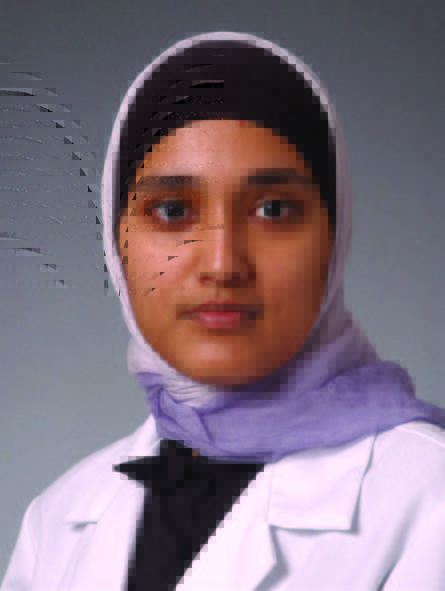
Tasleyma Sattar, DO, is a family practice physician with a solo practice in Southwest
Fort Worth. She serves as Adjunct Assistant Professor for the Department of Family
Medicine/TCOM as well as Clinical Adjunct Faculty for the Department of Physician
Assistant Studies/UNT Health. Her current research interests include the relation
of Vitamin D deficiency to hypertension and insulin resistance across race/ethnicities.
She also has an interest in the high rates of cardiovascular disease in the Asian
Indian Community. She has published some of her findings from a TAFP-sponsored study
in the Texas Family Physician, entitled “Vitamin D and Hypertension: Racial/Ethnic
Disparities.”
Her previous research study, “The Utility of the Medical Home: A Survey on Patient
Perspectives” published in the Osteopathic Family Physician, discussed the involvement
of patient opinions in the development of the medical home. Dr. Sattar is a 2005 graduate
of Nova Southeastern College of Osteopathic Medicine. She completed her residency
in family medicine at Palmetto General Hospital in Hialeah, Florida where she served
as Chief Resident. She is a 2010 STAR Fellow through the Texas Center for Health Disparities.
She is a dedicated osteopathic physician and actively incorporates the principles
of holistic medicine into her everyday practice. Her recent clinical focus has centered
on analyzing genomics, inflammatory markers and environmental factors as a pathway
to achieve better health. In her free time, Dr. Sattar enjoys hiking, horseback riding
and reading.
JOIN THE NORTH TEXAS PRIMARY CARE PROJECT
The North Texas Primary Care Registry Project (NRP) was established to develop and maintain a database of individuals who may be contacted for future NorTex studies. The program is simple to implement. Front desk personnel hand out 4-inch x 6-inch cards to patients checking in for their appointments. This card explains the project on one side and collects demographic and medical histories on the other side. The cards are returned to the Primary Care Research Center where they are entered in a confidential database. This information provides NorTex researchers with the ability to contact potentially eligible participants for future projects. Currently, 15 NorTex clinics are involved, and 1,285 patients have returned cards. We hope to grow this database to 10,000 potential research participants. If you are interested in signing up your clinic for the NRP, please e-mail us at NorTex@unthealth.edu.