
The Art of Healing

Injured performers are finding their way to a UNT Health Science Center doctor who
speaks their language and soothes their pain Tightness in her hip flexors made leaps
excruciating for Hannah Requa, a professional dancer who spends much of her day on
her toes. She was hardly a stranger to pain. Over her career she has endured a torn
Achilles tendon, a pulled hamstring and bursitis. Like most dancers, she pirouettes
through the pain. 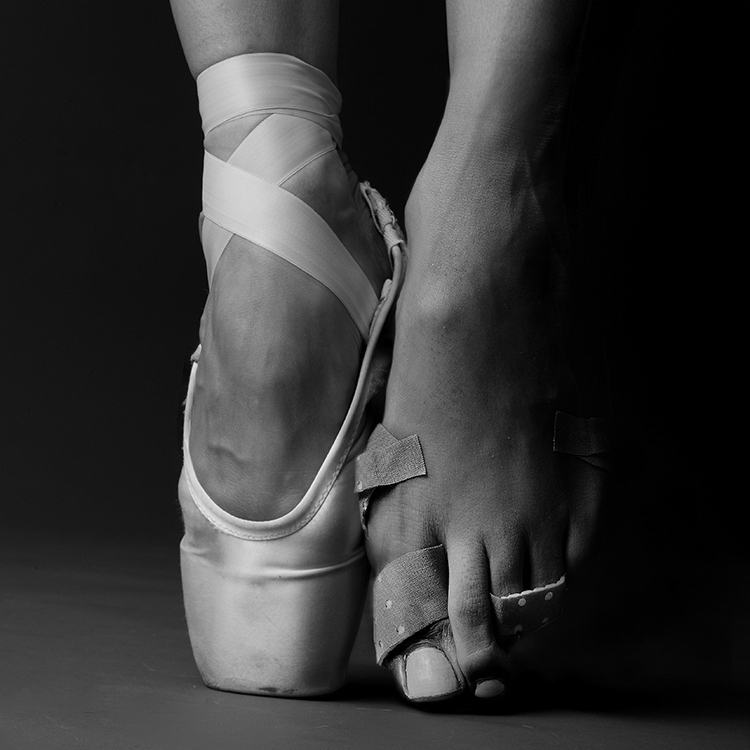
“I wake up every morning and wonder if the pain is going to affect my performance,
or worse, is it going to affect the length of my career,” she said. “But pain is just
part of the world I live in, and each injury becomes part of my journey.”
Often injuries end careers and quash the dreams of performers. Some 95 percent of
dancers injure their ankles, hips and shoulders. An estimated 89 percent of musicians
experience injuries severe enough to affect their performances. Singers and actors
endure a variety of injuries brought on by their work.
Although such injuries can be just as serious as those experienced by professional
athletes, the damage that performing artists endure historically has been largely
ignored. But that lack of awareness is changing as more people learn about the severity
of the injuries and what can be done to prevent them.
Leading the charge is Sajid Surve, DO, a triple board-certified physician who draws
on his training in physical, manipulative and pain medicine to get performers back
on stage. Since his arrival at UNT Health Science Center in 2014, Dr. Surve has become
a pied piper to performers throughout North Texas.
An Associate Professor of Family Medicine at UNTHSC, he also is Co-Director of the
Texas Center for Performing Arts Health, a unique partnership between the University of North Texas College of Music and UNTHSC that combines expertise from schools of music and medicine to make performing
arts safer and artists healthier. In recent years there’s been a growing effort to
raise awareness that many medical problems associated with learning and performing
music can be prevented, said Kris Chesky, PhD, the center’s other Co-Director. 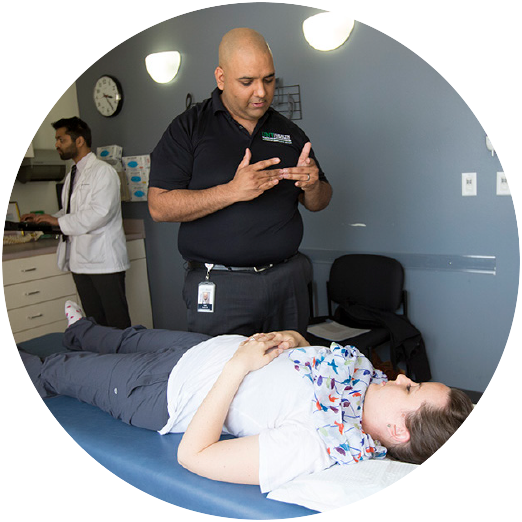
“As a result, future musicians will be aware of the occupational health risks associated
with learning and performing music and will be knowledgeable and competent to manage
them,” Dr. Chesky said.
Dr. Surve provides comprehensive but somewhat unconventional care, doctoring for dancers
and practicing medicine for musicians. Once a week he travels to UNT in Denton to
see music students there. It’s all in an effort to further the study of how music
and medicine fit together. It is indeed a unique environment where, for example, sensors
are built into piano keys to measure how hard pianists hit them.
On any given day, it’s not uncommon to hear the sound of a saxophone or beat of a
drum bouncing off the walls of the examination rooms where Dr. Surve sees patients.
Performers have found in Dr. Surve someone who does more than treat their injuries.
A musician himself, he speaks their language.
“My body is my instrument,” said Requa, a professional dancer with the Bruce Wood
Dance Project. “To find someone who understands your instrument as well as you do
is such a gift.” Other physicians can treat her pain, she said. But Dr. Surve understands
a dancer’s need to perform in spite of it. “He doesn’t just look at what happened,”
she said. “He looks at why it happened.”
Professional dancer Hannah Requa had a history of injuries, but it was excruciating hip flexor pain that forced her to seek help.
The perils of playing
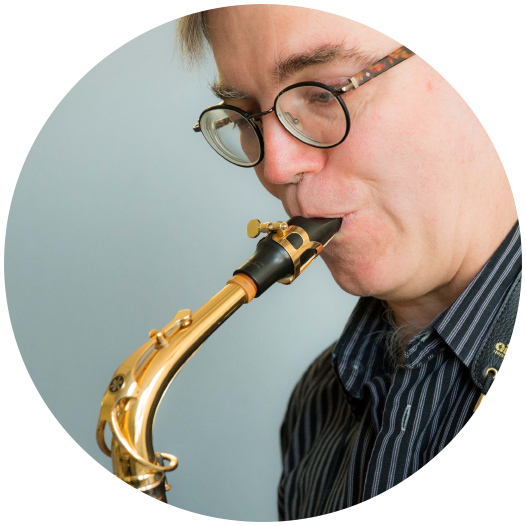 Eric Nestler has played the saxophone on stages all over the world. But a few years
ago, he was stopped cold by tremors that rippled down his jaw. His tongue contorted.
The muscles in his neck tightened so much he could no longer play the music he loved.
“I knew something was wrong,” he said. “But I had no control over it.”
Eric Nestler has played the saxophone on stages all over the world. But a few years
ago, he was stopped cold by tremors that rippled down his jaw. His tongue contorted.
The muscles in his neck tightened so much he could no longer play the music he loved.
“I knew something was wrong,” he said. “But I had no control over it.”
Focal dystonia, a condition characterized by involuntary muscle contractions, was
stealing his ability to perform. Playing the saxophone, the instrument Nestler had
dedicated hours to each day since middle school, was now destroying his career. Dr.
Surve is the first person to say how much he appreciates music. But he knows, too,
that playing it is a task that comes with risks: inflamed tendons, nerve damage, muscle
pain, hearing loss. For pianists, it’s tendonitis. For trombone players, it’s left
shoulder injuries. Singers can lose their voice. Even conductors endure pain from
holding their arms above their heads. Focal dystonia affects an estimated 1 percent
of all musicians and is triggered by repetitive movements.
By the time Nestler, a music professor at the University of North Texas, came to Dr.
Surve, he was desperate for relief. He’d gone to different doctors, considered Botox
injections for his chin and tried acupuncture, which provided temporary help. But
no treatment worked long term until he saw Dr. Surve, who used osteopathic manipulative
medicine to ease the tension in Nestler’s jaw.
“Now I have range again and am able to play in tune, whereas before I couldn’t do
that.”-Eric Nestler
Dr. Surve also suggested an unexpected treatment: playing another instrument. By retraining
the brain to master a new task, musicians with focal dystonia are sometimes able to
return to playing, Dr. Surve said. He suggested Nestler try the flute. “Playing the
flute uses the same muscles as the saxophone, but in a different way,” Dr. Surve said.
“As he gets better at playing the flute, he’ll get better at playing the saxophone
again.” Nestler still has focal dystonia, but the treatment has allowed him to perform
again. “Much of my energy is still devoted to not letting the tremors occur when I’m
playing,” he said.
“But now I have range again and am able to play in tune, whereas before I couldn’t
do that.”
Under Dr. Sajid Surve’s care, Eric Nestler still has tremors, but he is able to perform
again.
Knowing the vocabulary
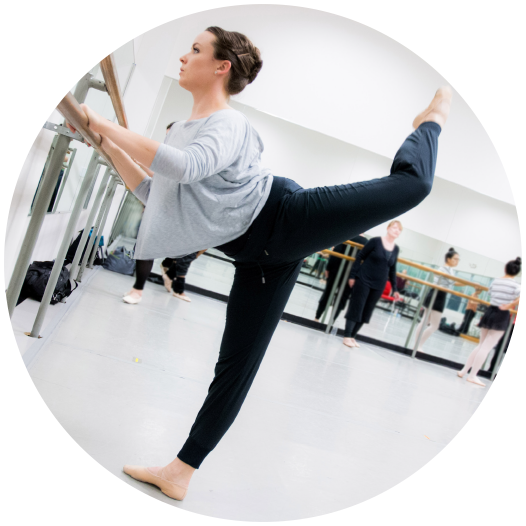 When Requa told Dr. Surve about her hip pain, his response caught her by surprise.
He asked her to demonstrate her developpe, a move in which the leg is gradually unfolded
and extended into the air. “He actually knows the vocabulary of dance,” Requa said.
When Requa told Dr. Surve about her hip pain, his response caught her by surprise.
He asked her to demonstrate her developpe, a move in which the leg is gradually unfolded
and extended into the air. “He actually knows the vocabulary of dance,” Requa said.By observing her in action, Dr. Surve could determine the source of her pain and manipulate
the pelvis to relieve it. Since then Requa has turned to Dr. Surve for other dance-related
ailments. “He seems to just know why my hip is bothering me and then he calmly adjusts
it,” she said. “He wants to keep you performing for as long as it’s possible and healthy.”
Dancing is notoriously brutal on bodies. The annual injury rate for dancers is 75
percent to 95 percent, with more than 20 percent of those being hip injuries.
“We know dancers are going to injure themselves. So we have to find ways to manage
that.”-Dr. Sajid Surve
“We know dancers are going to injure themselves,” Dr. Surve said. “So we have to find
ways to manage that.” Requa is confident that with Dr. Surve’s help, she’ll be able
to continue her career for a long time. “He knows how the body is supposed to be,”
she said. “And he knows how to put it back together when it’s not.”
A misaligned tendon in Nabeel Zuhdi’s left thumb left him in constant pain.
The strain of strumming
Pain in his left thumb nearly became Nabeel Zuhdi’s undoing. A classically trained guitarist, he practiced five hours a day in between his job as a waiter. But the wear and tear on his thumb caused by carrying heavy trays and strumming his guitar left him in constant pain.“Not everyone gets injured, but if you are practicing four hours a day, six or seven
days a week, and you are repeating the same motion, your body is going to get fatigued.”-Dr. Sajid Surve
“It was all very devastating,” Zuhdi said. A graduate music student at UNT, he knew
that injuries often plague musicians. He was even researching a study on the subject.
He turned to Dr. Surve, who examined his hand and quickly determined that a tendon
was misaligned, causing additional fatigue on the muscle.
“He smashed the muscle using his hand,” Zuhdi said. “It hurt at the time, but after
several days it got better.” The sharp pain that he had struggled with for years soon
disappeared, and he resumed playing without pain. Repetitive stress injuries are among
the most common for musicians, Dr. Surve said.
“Not everyone gets injured, but if you are practicing four hours a day, six or seven
days a week, and you are repeating the same motion, your body is going to get fatigued,”
he said. Rather than focusing on the instrument a musician plays, Dr. Surve looks
at the whole patient, from their posture to the way they move. Just as with sports,
there are ways to reduce the risk of performance injuries.
Along with colleagues at UNT, Dr. Surve has pushed for new standards that require
colleges to inform students of the risks that come with performing. “Musicians need
to take breaks and do stretching exercises to get their bodies ready to perform,”
Dr. Surve said. “And they need to be able to recognize when there’s a problem.”
That awareness could spare musicians the agony of injuries and the tendency to just
push through the pain without getting treated, Zuhdi said. “It’s devastating to have
an injury,” he said. “And it feels so good when you actually get relief.”
***
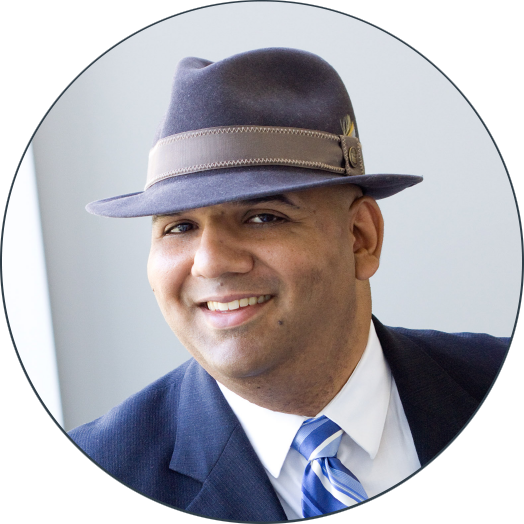
Sajid Surve, DO, OMM
BS Biology, Honors Program, The College of New Jersey DO, Rowan University School of Osteopathic Medicine
Dr. Surve has 10 years of experience as a Performing Arts Medicine clinician. He apprenticed
under Richard M. Bachrach, DO, FAOASM, the renowned PAM physician in Manhattan, New
York, and set up both dance and music medicine clinics during his time on faculty
at the Rowan University School of Osteopathic Medicine.
Since joining the UNTHSC team in 2014, Dr. Surve has become the performing arts medicine
provider for the DFW Metroplex, treating performers of all disciplines and skill levels.
He is also the music medicine provider for the UNT College of Music. Dr. Surve is interested in musculoskeletal injury management and prevention in the
performing arts population.
Sajid A. Surve, D.O. is Co-Director of the Texas Center for Performing Arts Health
and an Associate Professor with the UNTHSC Texas College of Osteopathic Medicine