
Dr. Wells-Beede revolutionizes future of medicine through virtual reality
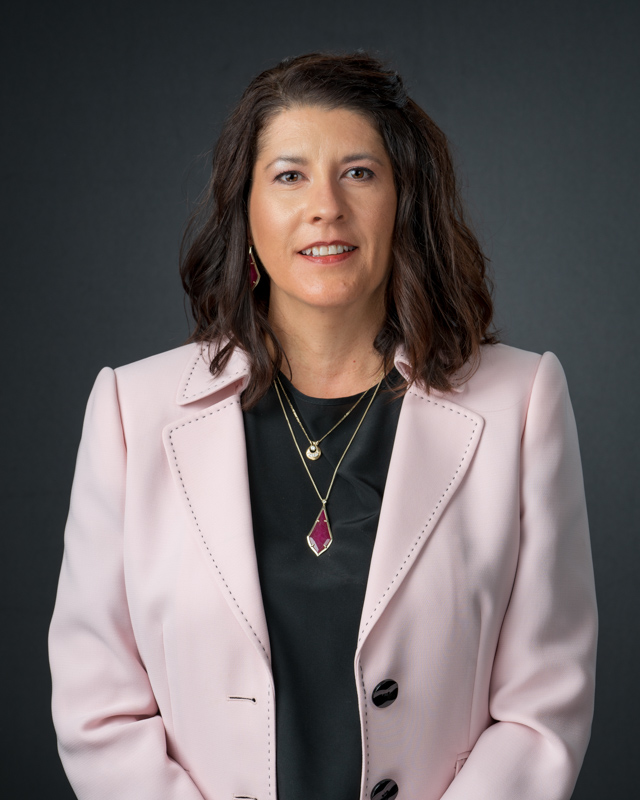 Typically, nothing good ever follows the phrase, “and then COVID hit.” But for Dr.
Elizabeth Wells-Beede, senior associate dean for UNT Health Fort Worth’s College of
Nursing, what came next was groundbreaking research that would revolutionize healthcare
education.
Typically, nothing good ever follows the phrase, “and then COVID hit.” But for Dr.
Elizabeth Wells-Beede, senior associate dean for UNT Health Fort Worth’s College of
Nursing, what came next was groundbreaking research that would revolutionize healthcare
education.
It was early 2020 when Wells-Beede was first introduced to using Oculus head-mounted displays in healthcare education. She was at an international simulation conference put on by the Simulation Society in Healthcare when a booth with oculus glasses caught her eye. Despite doing simulation since 2012, this was something she had never seen.
“Since I had already been doing simulation for a while at that time, I was kind of just walking around looking for ways I could use experiential learning and teaching students, but in a different way,” Wells-Beede said.
One of the first things that caught her eye was a vendor using the Oculus head-mounted displays.
“I put the headset on and thought, ‘This is interesting. How could this work in academia?’”
That question would go on to shape not only her career, but also how nurses are trained at UNT Health’s College of Nursing.
A silver lining in a global disruption
During the COVID-19 pandemic healthcare didn’t stop, which means healthcare education was more important than ever. The arrival of the pandemic forced educators to find new ways to train their students. Fortunately for Wells-Beede, she was already familiar with, and using, simulation. Rather than needing to pause and regroup, she pushed forward.
Through an internal grant from Texas A&M University, she launched her first virtual reality based project. Partnering with a visualization team from A&M, she developed a 360-degree simulation capturing a full antepartum assessment performed on a pregnant standardized patient – an experience often difficult to replicate consistently in traditional simulation settings.
Wells-Beede and her team’s work was groundbreaking for nursing education — and beyond — as students could now “step into” the antepartum setting using VR headsets, or even mobile devices. Visual overlays — like a digital pregnancy wheel and fetal positioning — added layers of understanding not easily achieved in real-time clinical training.
“That was just the beginning,” Wells-Beede said.
What began as a $10,000 pilot quickly evolved into a grant-supported research portfolio.
“We hit a major turning point when we received funding from the Health Resources and Services Administration,” Wells-Beede said. “They support workforce development and educational initiatives, so the VR project was perfect. I wanted to build immersive VR simulations aligned with emerging national nursing competencies, with a focus on values-based, community-centered care.”
Simultaneously, Wells-Beede was also collaborating on another grant-level initiative to develop a training for screening, brief intervention and referral to treatment — known as SBIRT. This simulation allowed students to practice the difficult conversations with patients about substance abuse. Students received immediate feedback, including insights into unconscious bias, something rarely captured in traditional training.
“We teach students to ask the screening questions, but don’t always teach them what to do when the answer to one of those questions is ‘yes.’”
Scenarios like this are exactly what make VR so crucial to healthcare education.
From classrooms to communities
Today, Wells-Beede’s work has expanded into a collection of immersive simulations used across both undergraduate and graduate programs at UNT Health.
Some of these simulations include a pediatrics diabetes case in a school environment; a home health scenario focused on medical reconciliation for a recently discharged geriatric patient; maternal health simulations supporting home visits for at-risk mothers and infants; and a behavioral health case involving suicidal ideations in a community clinic.
Wells-Beede explains that these simulations are not only clinically relevant, but they are also largely student-created.
“That is one of the most unique things about our simulations at UNT Health,” Wells-Beede said. “They are student led. Students at A&M are creating these simulations that our students here are using here.”
The impact of VR goes beyond the walls of UNT Health. Through partnerships with the City of Fort Worth and opioid abatement initiatives, Wells-Beede’s SBIRT simulation has trained hundreds of nursing students and is being expanded to practicing nurses.
The future of VR
As VR technology continues to grow and evolve, Wells-Beede believes its role in healthcare will only grow.
“Things like smart glasses and mixed reality platforms are already changing how we use VR,” Wells-Beede said. “There’s a growing potential for interprofessional simulation training which will allow nursing, medical and allied health students to all collaborate in a simulated environment. That is going to revolutionize healthcare education.”
A career of innovation
What began as a curiosity about VR glasses at a conference has become the thing that has defined and shaped Wells-Beede’s career.
“When I started this, VR was the new, shiny thing,” Wells-Beede said. “It’s turned into something so much bigger that is truly transforming the future of medicine.”
While she has already made enormous strides — with much success — this is just the beginning.