
Public Health student reflects on benefits of working at Gibson D. Lewis Library
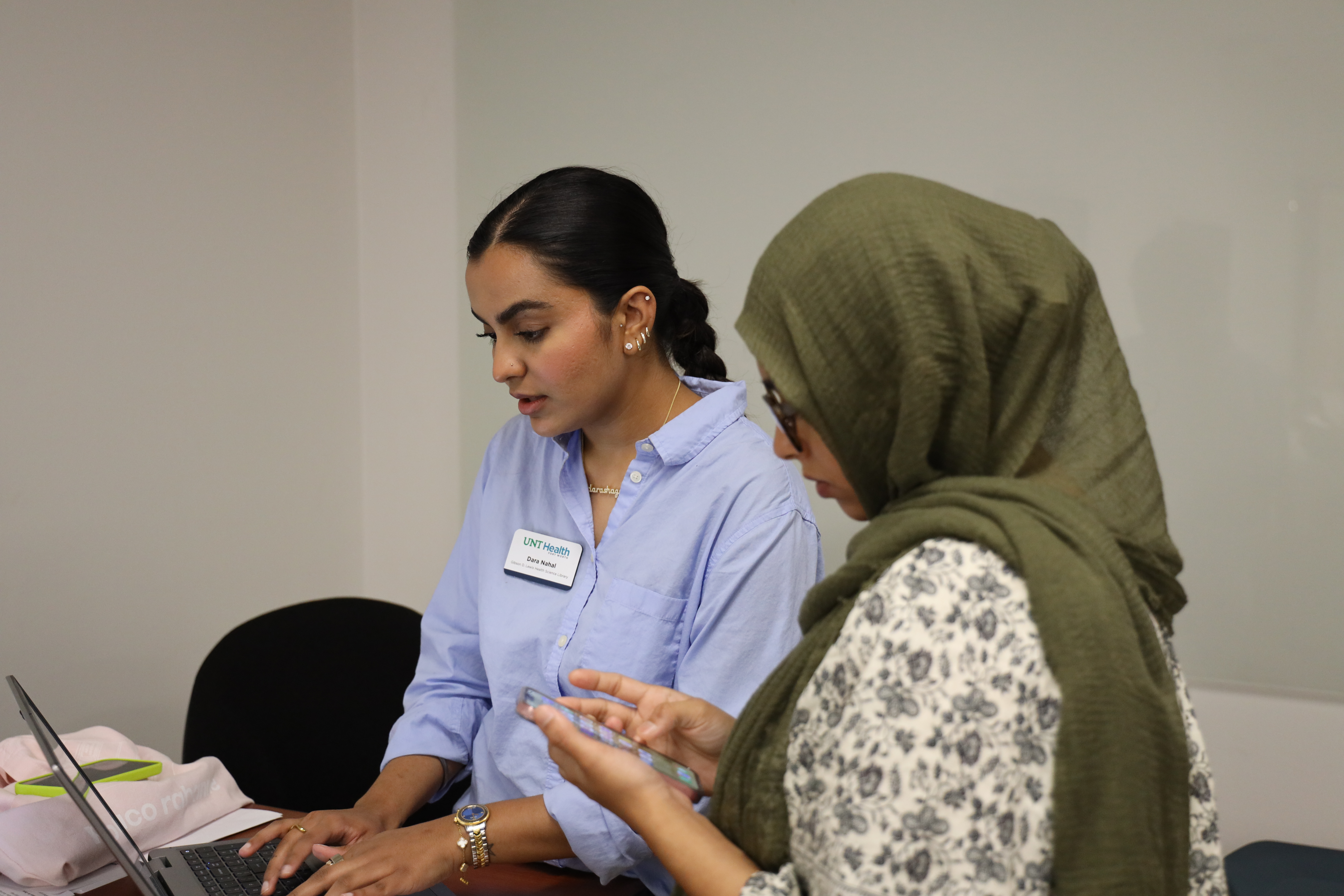 Darashagam "Dara" Nahal was hired as the library’s student peer research mentor in
July 2025, when she was a full-time Department of Public Health student. She was frequently
the first person people would see when they entered the library offices. This was
intentional, said Melissa Brand, librarian and her direct supervisor.
Darashagam "Dara" Nahal was hired as the library’s student peer research mentor in
July 2025, when she was a full-time Department of Public Health student. She was frequently
the first person people would see when they entered the library offices. This was
intentional, said Melissa Brand, librarian and her direct supervisor.
“If a student was sitting in LIB 222, then maybe our students would feel more comfortable coming in to ask questions,” she said.
We asked Nahal about her experience working at the Lewis Library for the past year. Here’s what she said.
What was the biggest eye-opener when you started working in this position at the library?
The biggest eye-opener was realizing that there was a communication gap between students and the library staff. I was glad that, as the student research peer mentor, I was able to help spread the word about the many services we offer and help students connect with those resources.
Did it take long to establish a workable routine that wouldn’t overwhelm you as a full-time UNT Health student?
I got the hang of it early on, and it really wasn't as scary as it might seem. It was a lot of fun because it goes hand in hand with research. Brainstorming ideas for guides and tutorials and creating them ended up being one of my favorite parts of the job. I am leaving with five guides under my belt. I encourage students to check them out because I created them with other students in mind. As a former UNT Health student myself, these are topics I wish I had more guidance on. I'm happy to be able to provide that insight to others through my guides: Behind the Paywall: Accessing Articles, Cowtown Reads: Book Recommendations from the UNT Health Community, Handling Sensitive Data, Journal Matching: Choosing Where to Publish, and Research 101: A Student's Guide to Getting Started.
What was it like providing support to your peers?
It was incredibly fulfilling to be able to help other students. I always think that if I'm helping one student, I'm probably helping many more because that knowledge gets passed along. I especially enjoyed introducing students to library resources and services they didn't know existed and watching them realize how much support was available to them.
What did you learn about health science libraries that expanded your perspective as a student and research scholar?
I learned that there is so much that goes into creating a strong, publishable paper. A lot of the time, when a manuscript finally makes it out of the overwhelming abyss of shelved drafts, a librarian played an important role in helping make that happen. Librarians have an incredible amount of knowledge and they are so generous with it. Whether you're stuck on a project or don't know where to begin, a librarian can help. Working here gave me a whole new level of respect for health science libraries and librarians. The staff at Gilson D. Lewis Library are wonderful and truly deserve their flowers.
You taught a webinar on the fundamentals of GIS on Aug. 5. What was it like to develop this presentation as part of your role at the library?
I am a graduate of the first cohort of GIS Certificate students. There were only four of us in that first cohort. Even though GIS is growing rapidly and is being used in so many different fields, many people still aren't familiar with what it is or how powerful it can be. When I proposed the idea of teaching a GIS class, the librarians were incredibly supportive and encouraged me every step of the way. They gave me the flexibility to develop the webinar in a way that reflects my own teaching style and interests. I'm excited to introduce others to a field that I'm so passionate about and hopefully inspire them to explore GIS in their own work.
How has working at Lewis Library enhanced your experience as a student and future healthcare professional?
Working at Lewis Library has strengthened both my research skills and my confidence. I've gained a much deeper understanding of the research process, scholarly publishing, literature searching and the many resources available to support evidence-based work. More importantly, I've learned the value of collaboration and asking for help when you need it. Those are lessons I'll carry with me throughout my career.
What will you miss most about working at the library at UNT Health?
The people. I will miss all my coworkers dearly. They are the most supportive, kind and understanding group of people I have ever worked with. I had the best experience here. I can confidently say that the next student research peer mentor will too. I am leaving with a full heart, countless memories, lifelong friendships, and an abundance of knowledge.
What advice would you offer to a future Student Research Peer Mentor?
I would encourage the next Student Research Peer Mentor to make the most of every opportunity. This role gives you the chance to learn something new almost every day, work alongside amazing people, and make a real impact on other students. Enjoy every minute of it.
As Nahal leaves UNT Health to begin doctoral studies in California, the library will soon be seeking candidates to fill the vacant position.
“We look forward to working with more students, but her shoes will be hard to fill,” Brand said.
To learn more about open positions, please click here.