
The five most common ballet injuries: Comprehensive MSK care for dancers
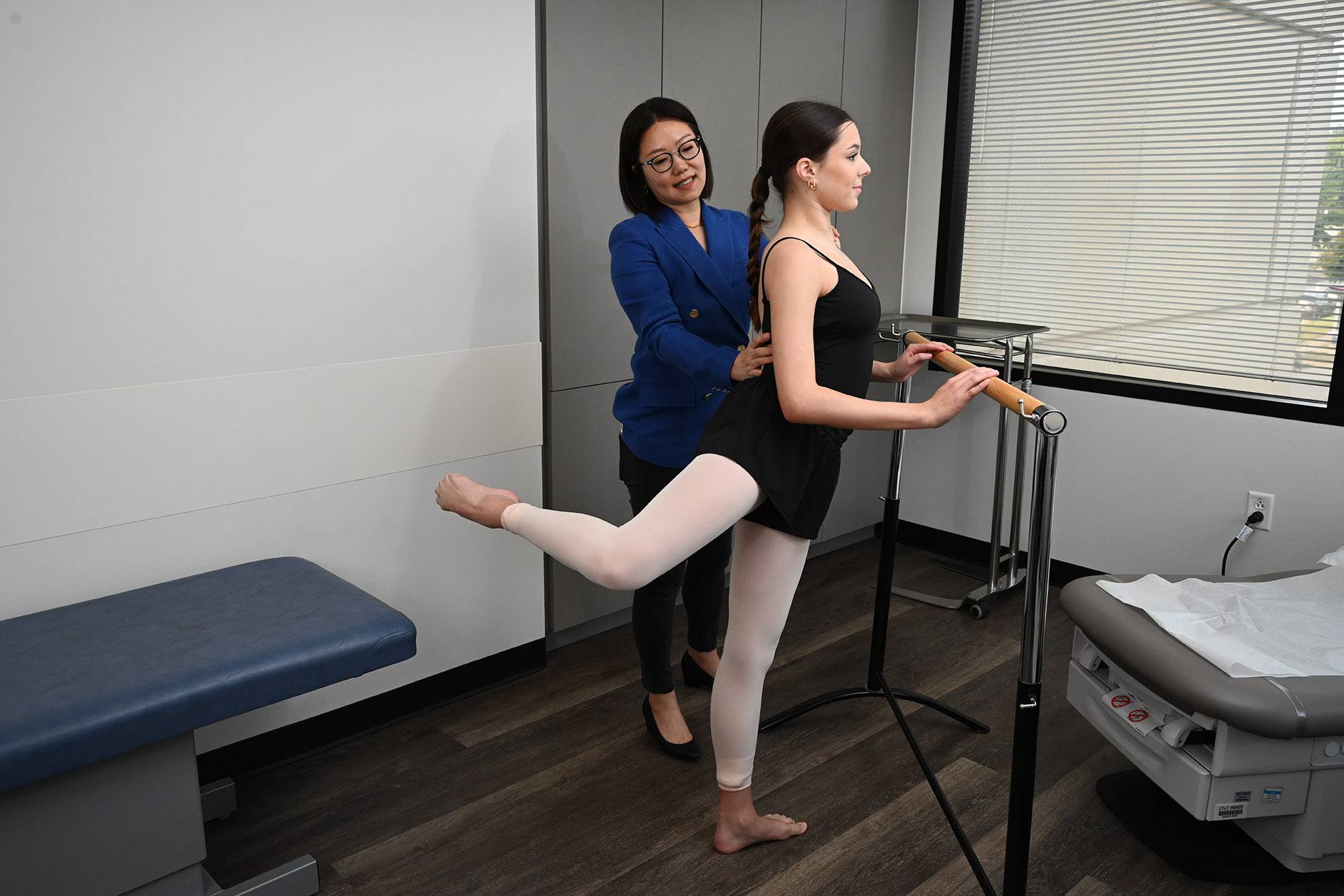
Dr. Yein Lee evaluates a young dancer.
Behind every beautiful ballet performance, there are countless hours of training, repetition and physical demand placed on the body. Ballet requires exceptional strength, flexibility, balance and control—making dancers especially vulnerable to musculoskeletal (MSK) injuries involving muscles, bones, joints, tendons and ligaments.
At UNT Health Clinical Practice Group, our performing arts medicine providers take a full-spectrum MSK approach to caring for dancers. Our clinic offers advanced diagnostics using ultrasound, interventional treatments, acupuncture, and osteopathic manipulative treatment (OMT) as well as coordinated rehabilitation to support recovery, performance and injury prevention for dancers.
Below are the five most common dance-related injuries we see in ballet dancers—and how a performing arts medicine specialist can help.
Ankle sprains
Ankle sprains are among the most common ballet injuries, particularly with pointe work, jump and rapid changes in direction. These injuries occur when ligaments are overstretched or torn, often due to instability, fatigue or poor alignment.
A UNT Health Clinical Practice Group provider evaluates the entire kinetic chain to identify contributing factors such as foot mechanics, calf tightness or hip weakness. Treatment may include:
- Osteopathic manipulative medicine (OMM) to reduce swelling, restore joint mobility and improve alignment
- Diagnostic ultrasound to assess ligament integrity
- Injection options such as PRP or prolotherapy for persistent ligament injury
- Coordination of care with physical therapists to restore strength and proprioception
This comprehensive MSK approach helps reduce reinjury risk and supports a safe return to dance.
Shin Splints (Medial Tibial Stress Syndrome)
Shin splints are a common overuse injury in dancers, particularly during periods of increased rehearsal intensity, repetitive jumps, or changes in flooring or footwear. Pain typically develops along the inside of the shin bone and is often related to excessive loading, poor shock absorption, muscle imbalance or alignment issues in the legs.
A UNT Health Clinical Practice Group provider evaluates how the entire body moves together to identify contributing factors such as foot position or rigidity, calf tightness, how stress is placed on the shin, and hip or core weakness. Treatment may include:
- Osteopathic manipulative treatment to improve movement, reduce tightness, and support proper alignment.
- Diagnostic ultrasound to look for irritation in the bone and rule out more serious stress injuries .
Coordination of care with physical therapists to safely increase activity, strengthen the calves and feet, and improve shock absorption.
This comprehensive musculoskeletal approach helps reduce the risk of stress fractures and supports a safe, sustainable return to dance.
Achilles Tendonitis
Achilles tendonitis is a common overuse injury in dancers, particularly those who perform repetitive jumps, relevés, and pointe work. It develops when the Achilles tendon is subjected to repetitive loading without adequate recovery, leading to pain, stiffness and reduced push-off strength. Tight or weak calf muscles, limited ankle movement, poor landing technique, or weakness in the hips or core can all contribute to this injury.
A UNT Health provider evaluates the entire kinetic chain to identify contributing factors, including checking calf muscle balance, restricted ankle flexibility foot mechanics, and hip or core weakness. Treatment may include:
- Osteopathic manipulative techniques to reduce myofascial tension, improve ankle and foot mechanics, and optimize load distribution through the tendon.
- Diagnostic ultrasound to examine the tendon and check for thickening or small tears.
- Injection options such as PRP or prolotherapy for chronic or hard-to-treat tendon pain.
- Coordination of care with physical therapists for strengthening programs, a safe return to jumping, and technique changes.
This comprehensive musculoskeletal approach supports tendon healing, reduces the risk of recurrence and promotes a safe return to full dance activity.

Dr. Lee assists a violinist.
Snapping hip
Snapping hip syndrome occurs when a tendon moves over a bony structure in the hip, creating an audible or palpable snap. While often painless at first, it can progress to bursitis or labral injuries if left unaddressed.
Our MSK-focused evaluation looks beyond the hip itself, addressing:
- Core and pelvic stability
- Muscle imbalances or tightness
- Alignment and movement patterns
Treatment may include osteopathic manipulative treatment, targeted rehabilitation with physical therapists and imaging when indicated. The goal is to restore efficient movement while protecting long-term hip health. Stretching and proper technique, such as fully engaging the abdominal muscles, can also help relieve tension on the hip flexor.
Your Performing Arts Medicine specialist will create a treatment plan customized to your injury, address any underlying alignment issues, muscle tightness, or other concerns, and create a timeline for recovery based on your practice and performance schedule.
Stress fractures
Stress fractures are common overuse injuries in ballet, most frequently affecting the metatarsals due to repetitive loading during pointe work, though the tibia and calcaneus (heel) are also commonly involved. These injuries develop when repetitive mechanical stress exceeds the bone’s ability to remodel and recover. If left unaddressed, early stress injuries can progress to complete fractures with prolonged recovery times.
A UNT Health Clinical Practice Group Performing Arts Medicine provider emphasizes early recognition and evaluation of the entire kinetic chain, including technique, footwear, training volume, nutrition and alignment. There are three progressive stages of bone stress injury, and timely intervention can often prevent progression:
- Bone strain – Symptoms are often absent at this stage, but advanced imaging such as bone scan or MRI may show increased bone remodeling activity. Early load modification and biomechanical correction can prevent injury progression.
- Stress reaction – Localized tenderness or activity-related pain may develop and is often overlooked by dancers. Identification at this stage allows for technique refinement, footwear or surface modification, and temporary workload reduction to avoid long-term injury.
- Stress fracture – A true fracture line has developed, typically requiring a period of protected or non–weight-bearing activity for healing. An osteopathic provider helps guide a staged recovery plan, addressing contributing biomechanical factors and coordinating a safe, gradual return to class.
This comprehensive musculoskeletal approach reduces the risk of progression, supports bone health and promotes a safe return to performance.
Full-spectrum MSK care for ballet dancers
What sets our clinic apart is our comprehensive musculoskeletal approach. In addition to OMT, we offer:
- Diagnostic ultrasound for real-time injury assessment
- Injection therapies, including PRP and prolotherapy
- Acupuncture and dry needling
- Integrated care with physical therapists and other specialists
- Personalized injury prevention strategies for dancers
Whether you are recovering from a dance injury or looking to improve longevity and performance, our performing arts medicine providers are here to support you. Our goal is to keep dancers moving with strength, artistry and longevity—so they can perform at their best both on stage and in the studio.
For a holistic, full-spectrum MSK approach to ballet injuries, schedule an appointment with UNT Health Performing Arts Medicine Clinic in Fort Worth by calling 817-735-2455.