
Skin screenings 101: Why annual dermatology visits matter
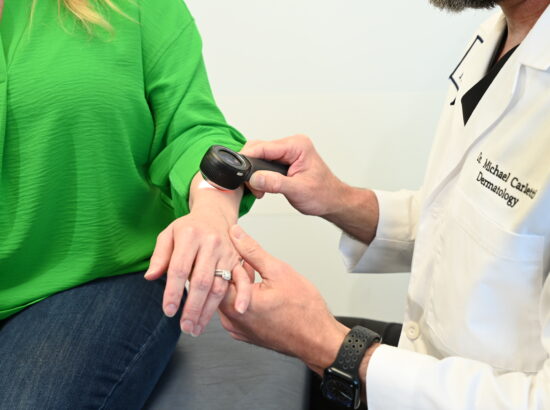
Dr. Michael Carletti examines a patient.
In Fort Worth, it’s essential to protect your skin from the intense Texas sun. Skin
cancer is preventable and your lifestyle choices now can help you avoid a diagnosis
later.
While many people delay or skip their annual dermatology visit, Americans have a 1 in 5 chance of being diagnosed with skin cancer by the age of 70, with more than two Americans on average dying of the disease every hour.
When was your last skin screening? If you’re not sure, it may be time to schedule
one – early detection of skin conditions can save your life.
What is a skin screening?
Your annual skin screening involves a dermatology specialist conducting a full-body skin check, including hard-to-see areas, to look for signs of skin cancers or skin conditions. The objective is to find melanomas, moles, lesions, bumps, or sores, and conduct a biopsy if necessary to evaluate if cells are cancerous. This preventative screening should happen annually to catch skin cancer in the early stages, possibly before you’ve noticed any symptoms.
Why annual dermatology visits matter
While skin cancer can affect anyone, Texans should take greater precautions due to
the high UV index and sunny climate. Prioritizing regular skin checks is an essential
piece of your prevention plan. Early detection of skin cancer can increase the survival
rate significantly. For example, when Melanoma is caught before it spreads, there
is a 99% five-year survival rate.
Regular visits allow your dermatology specialist to get familiar with your skin and
monitor changes over time, as well as managing ongoing conditions like acne, eczema
or psoriasis.
In addition to skin cancer prevention and ongoing treatment, your dermatologist can
create a personalized skincare routine tailored to your specific concerns and goals.
Who should get screened?
The short answer is…everyone! You might be at higher risk if you fit into one of the following categories:
-
People with a history of sunburns, tanning bed use or lots of sun exposure
-
Family history of skin cancer
-
Individuals with lots of moles or fair skin
-
Patients managing skin conditions or changes in skin health
It’s also important to note that skin checks are important for people of all skin tones. Skin cancer can affect anyone, regardless of melanin content. Because skin cancer is associated with fair skinned individuals, non-white people are more likely to be diagnosed at a later-stage. Please be aware that darker skin tones do not provide natural sun protection.

What to expect at your appointment
Your skin specialist will review your medical history, take a look at any areas that
have you concerned, conduct a systematic, full-body skin examination and discuss treatment
options.
If there is a spot that is concerning, you will likely have a biopsy to confirm if
the cells are cancerous. Depending on the size and area, you may have a shave, punch
or excisional biopsy. Your provider will follow up with lab results of your biopsy,
usually by phone call.
If it is determined that you have skin cancer, you may be a candidate for Superficial
Radiation Technology, or SRT, which is a non-surgical treatment option that is painless
and leaves minimal or no scarring.
How to prepare for a skin screening
-
Remove makeup
-
Remove nail polish
-
Avoid lotions as they can temporarily change or mask a skin texture issue
-
Be prepared to change into a gown
-
Avoid wearing tight clothing that might leave redness or bumps on your skin
-
Be prepared to tell the dermatologist about any worrisome spots you want checked out
-
Bring photos if you’ve tracked changes yourself
Why patients choose UNT Health Dermatology
Our providers are board-certified dermatologists with extensive experience in treating medical and cosmetic skin issues. Dr. Michael Carletti and Dr. Stephen Weis are consistently recognized as some of the best dermatologists in Fort Worth by Fort Worth Magazine and 360West Magazine. A few reasons our patients love us:
-
Compassionate care centered around your goals for your skin
-
Access to advanced diagnostics and treatments, like SRT
-
Convenient location in Fort Worth’s Cultural District
-
UNT Health Clinical Practice Group is the academic clinical practice of UNT Health Fort Worth, meaning our providers are up-to-date on the latest in medical advancement as a result of teaching and practicing
Make Skin Health a Habit: Book Your Annual Visit Today
Whether you're looking for a new doctor for skin issues, or just haven’t come in for your annual check-up in a few years, it’s never too late to get back on track with preventative care. Make it a habit to come in annually.
To find out if you need a referral, or if our providers are in-network with your insurance, call our office and we’ll be happy to help! Book with UNT Health Dermatology by calling 817-735-7625 or request an appointment here!