
UNT Health epidemiologist selected among 15 global leaders for Atlantic Fellowship
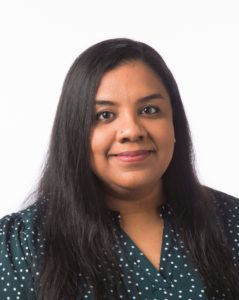 Malinee Neelamegam, Ph.D., MPH, assistant professor in the Department of Public Health at UNT Health
Fort Worth, has been selected for the 2027 cohort of the Atlantic Fellows for Health Equity, a competitive global fellowship based at the Fitzhugh Mullan Institute for Health
Workforce Equity at the George Washington University Milken Institute School of Public
Health.
Malinee Neelamegam, Ph.D., MPH, assistant professor in the Department of Public Health at UNT Health
Fort Worth, has been selected for the 2027 cohort of the Atlantic Fellows for Health Equity, a competitive global fellowship based at the Fitzhugh Mullan Institute for Health
Workforce Equity at the George Washington University Milken Institute School of Public
Health.
Neelamegam is one of only 15 fellows chosen worldwide for the program's tenth cohort, announced on Aug. 20. This year's class represents eight countries, including Australia, Botswana, Cameroon, Ghana, Nigeria, the Philippines, the United Kingdom and the United States, and spans disciplines including health economics, medicine, journalism, nursing, forensic psychiatry, emergency services, end-of-life care and food security.
“This fellowship comes at an inflection point in my career,” Neelamegam said. “For the past several years, I have focused on building a strong foundation as an early-career scientist. Now I am asking a different question, not only how I will continue to grow as a researcher but what kind of leader I want to become and how to create the conditions for others to thrive.
“What I most want to bring back is what I learn from peers running community-centered programs in places with far fewer resources than we have,” she said. “North Texas has extraordinary community organizations that could benefit from having additional resources. I want to return with practical models they can use, and with the ability to help build something durable at UNT Health rather than one more short-term project.”
As an epidemiologist whose work centers on aging, dementia and chronic disease in communities that have been historically excluded from research, Neelamegam leads community-engaged studies on immigrant health with a particular focus on South Asian populations. During the fellowship year, she will expand the Writing for Research, Impact, Translation and Engagement Lab, a program she founded. The year-long WRITE Lab will build writing and dissemination capacity among community-based organizations, first-generation doctoral students, community college faculty and other under-resourced academic partners across North Texas. Participants enter with an active manuscript, policy brief, community report or op-ed and move it toward submission through biweekly skill-building sessions, peer writing pods, protected writing time and individualized coaching.
“Writing determines whose knowledge becomes evidence, whose stories shape public narratives and whose solutions influence policy and resources,” Neelamegam said. “Too often, the people closest to a problem are excluded from authorship, so community-informed solutions never reach journals, policymakers, funders or the broader public. By building writing capacity across community and academic settings, we expand who gets to shape health narratives.”
“Dr. Neelamegam's selection as one of just 15 Atlantic Fellows worldwide is a remarkable achievement and recognition of her leadership in advancing health equity,” said Lisako McKyer, Ph.D., chair of the Division of Population and Community Health in the Department of Public Health. “Her work exemplifies authentic community engagement by ensuring that communities are not simply participants in research, but partners in generating and applying knowledge. We are excited to see how the global connections, ideas and perspectives gained through this prestigious fellowship will strengthen her work and create lasting benefits for North Texas.”
A first-generation high school graduate from Malaysia, Neelamegam earned her bachelor's degree in biomedical sciences from the National University of Malaysia and her Master of Public Health and doctorate in epidemiology from the University of South Florida. She completed a postdoctoral fellowship as a Fogarty Global Health Equity Scholar at the Yale School of Public Health, studying aging among people living with HIV.
Launched in 2016, Atlantic Fellows for Health Equity is one of seven interconnected Atlantic Fellows programs worldwide, with 166 current and senior fellows across 36 countries. The one-year, nonresidential fellowship begins in early 2027 and combines in-person convenings with virtual sessions, faculty mentorship and coaching as participants advance projects addressing health challenges in their local communities. Upon completion, fellows will join a global network of more than 1,000 leaders.