What’s Happening in the ORC?Find the latest updates on all areas of the ORC, including the IACUC, the NTR IRB, RCOI, and International Compliance. Employee Spotlight – Meet Itzel Peña Pérez!This quarter we introduce our team member – Itzel Peña Pérez! How to Get to the “Yes”In this issue, we’ll help you get to the “Yes” with a brief rundown of the audit programs for both animal and human subject research projects. You’ve Got Questions, We’ve Got Answers!In this issue, we answer questions about potential conflicts of interest, common mistakes made on IRB submissions, and how to add students to IACUC Protocols. Interview with Dr. Tom CunninghamIn this special article, we got the scoop on Dr. Cunningham’s research, his experience working with our office, and the tips and tricks he has for maintaining compliance. ORC CalendarFind all of the meeting and deadline dates for the next three months of Board and Committee meetings.
|
What’s Happening in the ORC?There have been a few staffing changes in the ORC since the last quarter!
Our office has been working diligently on updating current/creating new procedures, webpages, and guidance materials in order to better serve the research community:
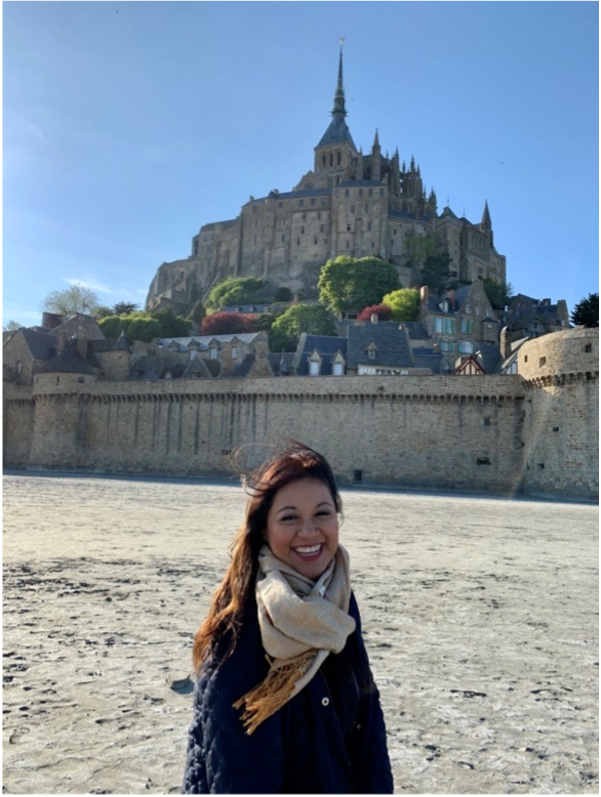
IACUC:The IACUC Office recently updated the Post-Approval Monitoring (PAM) program implementing three types of audits: Document Review, Laboratory Audit and Procedure Observation. These audit types will help meet the ongoing oversight requirements of animal use activities to provide comprehensive education to our researchers and help ensure the best quality in the care and use of research animals. You can find further details regarding the PAM Program in the IACUC’s Post-Approval Monitoring Program website. If you have any questions about these resources/updates, please contact the IACUC Office at IACUC@unthealth.edu. NTR IRB:To better assist human subject researchers in navigating our submission process, the NTR IRB premiered two 15-minute training videos. One training video (“Concepts and Resources”) provides a brief historical background of IRBs, a general overview of IRB concepts, and highlights NTR IRB specific resources and guidance materials. The second video (“IRBNet Tutorial for Researchers”) focuses on how to navigate our electronic system, IRBNet. Check them out! The IRB meeting schedule for FY2023 has also been posted. Please review and plan your research projects accordingly. Please contact the NTR IRB if you have any questions regarding your human subject research project/submission at NorthTexRegIRB@unthealth.edu. RCOI:The annual UNT Health Research Conflict of Interest (RCOI) disclosure campaign is currently underway (started on September 1, 2022). Please note that all UNT Health researchers (i.e., individuals engaged in research) are required to complete the appropriate Research Conflict of Interest training in CITI, and complete the research specific disclosure found within the new UNTS integrated GRAMS Conflict of Interest Disclosure System. (The RCOI training, titled UNT Researcher Conflict of Interest within the UNT Health CITI account, must be done prior to submitting the disclosure). You may access the GRAMS system by clicking here. Training on how to navigate the new COI system is available on UNT Health Bridge. Please visit the RCOI website, or contact the Office of Research Compliance at Research.Compliance@unthealth.edu should you have any questions related to research conflict of interest disclosures. International Compliance/Export Control:As noted above, Ms. Perez is our new Export Controls & Research Ethics Officer and will be overseeing international compliance and export control within UNT Health as well as assisting with the post-approval monitoring program for UNT Health human subject research projects. You may continue to reach out to the Office of Research Compliance for any questions related to these areas at Research.Compliance@unthealth.edu. You may also contact Ms. Perez at Crystal.Perez@unthealth.edu. Employee Spotlight – Meet Itzel Peña Pérez
How long have you worked in the UNT Health Office of Research Compliance? What is your role, and what do you like best about it? I joined the Office of Research Compliance in August 2008 (totaling 14 years). As the Director for the North Texas Regional Institutional Review Board (NTR IRB), I oversee the daily operation of the office. There are several reasons I enjoy working within the NTR IRB/Office of Research Compliance but the best one…help advance (ethically sound) research to create a healthier community (and learn about all the great contributions our NTR IRB researchers are making! Sorry, I could not keep to one!). Of the five UNT Health values, which one do you believe you exemplify the most, and why? Working in compliance, all five UNT Health values (serve others first, integrity, respect, collaboration and be visionary) resonate with me and I do my best to live them daily. However, the value that I hope people sense from me is respect. My faith and upbringing taught me to treat others with compassion, dignity, kindness, appreciation, and empathy (i.e., the golden rule). Respect is a fundamental foundation to trust, and I work diligently to build that trust with our clients (researchers, human subjects, partners, colleagues, etc.). Once trust is established, wonderful things tend to follow (e.g., collaboration, being innovative/visionary, serve others, etc.)! This is another reason I enjoy working within research compliance, as I see what we do as respecting those participating in research (protect their rights and welfare) and those carrying out the research (protect the researchers’ scientific contribution by ensuring the regulations and policies have been upheld). Moreover, I strive to produce quality service because I respect the scientific, health and social contributions made by our NTR IRB research community, and hope all feel this when interacting with me. What is something we would be surprised to find out about you? I am a UNT Health alum. I graduated with my Clinical Research Management (CRM) degree within the College of Biomedical and Translational Sciences in May 2008 and was the first CRM intern to serve within the Office for the Protection of Human Subjects (now part of the Office of Research Compliance as the North Texas Regional IRB). I have been at UNT Health for 16 years! On a more personal note, I enjoy traveling and learning about new cultures through those travels and experiences. I hope to resume my travels soon with 2 toddlers in tow (wish me luck). Until then, I am happy to serve as your travel agent! Tip#1: If you are ever in Vienna, Austria, you must try Café Central! Great pastries! |
|
How to Get to the YesA brief rundown of the audit programs for both animal and human subject research projects. The Office of Research Compliance is responsible for oversight of approved protocols for both animal and human subject research. Consistent with this responsibility, our office conducts both periodic and directed audits that are internal to the University. Although the word audit might sound less than pleasant, we want to work with you to make sure you and your research are successful. Hopefully, we can get one step closer to de-mystifying the audit process with this article.
IACUC:The UNT Health IACUC is excited about the new Post-Approval Monitoring (PAM) Audit Program! As mentioned above, the revamping of this program includes three audit types: Document Review, Laboratory Audit, or Procedure Observation.
At the beginning of each month, IACUC Office staff assign selected protocols to an audit type. The PI receives notification that their protocol was selected for an audit, along with identifying the audit type. Within the notification there will be specific instructions based on the audit type.
As we hope to utilize the PAM Audit Program as an opportunity to build relationships with the research staff, below are some tips on preparing for a successful PAM Audit.
How to Prepare for a PAM Audit:
For more information regarding the IACUC PAM Audit Program, please refer to IACUC SOP 026: Post-Approval Monitoring, or visit the Audits & Inspections tile in the Investigator Toolbox on the IACUC Website.
Human Subjects Research:Although the term/phrase “human subjects research audit” can conjure up all sorts of scary or negative thoughts or reactions, fear not! The Office of Research Compliance has plenty of guidance in place to ensure you and your research team pass your post-approval monitoring audit with flying colors!
There are two kinds of post-approval monitoring audits for human subject research studies conducted at/by UNT Health (which are under the purview of the North Texas Regional Institutional Review Board):
For either type of audit, the ORC Auditor will contact the study team well ahead of time to set up a date/time for the audit to occur. The ORC Auditor will also provide the PI/study team with a list of documents to have ready for the audit. Throughout the process, the ORC Auditor will keep the PI/study team aware of any findings that occur, whether they be major or minor, and will notify the study team of these prior to sending a final post-audit report. After the audit, PIs/study teams will also have a chance to meet with the ORC Auditor, IRB Chair, and Research Compliance Director to discuss any findings, potential corrective plans, or general questions. All audit reports, findings, and corrective action plans are presented to the North Texas Regional IRB for review and acknowledgement.
Please note that we encourage PIs/study teams to provide us with feedback about the audit/audit process! As noted, although our goal is to ensure continuing compliance with the research protocol, federal regulations and institutional processes, we also wish for the audit process to be educational and provide an avenue for investigators to ask questions and obtain clarification. So please do not hesitate to speak up – we are here to help you! 😊
For more detailed information about the Post-Approval Monitoring/Audit process for human subject research studies, please review the ORC/NTR IRB Post-Approval Monitoring/Compliance Audits for Human Research Studies: Principles and Procedures.
You can also view the ORC Post-Approval Monitoring Audit Checklist. And as always, please call 817-735-0409 for any general questions about the human subject research audit process. |
||
You’ve Got Questions, We’ve Got Answers!1. Q: What are the different types of potential conflicts of interest?A: “Conflicts of interests in Research”, “Research Conflict of Interest” or “RCOI” refer to situations in which financial or other personal considerations may compromise, or have the appearance of comprising, a researcher’s professional judgment in conducting or reporting research. This includes cases where university members are in a position to influence research and their extramural activities are such that they or their family may receive a financial benefit or improper advantage from the research. There are many types of conflict of interest:
UNT Health policy states that no proposed, awarded, or ongoing UNT Health research shall be biased by any conflicting interests of UNT Health investigators for the design, conduct, or reporting of that research.
Conflicts of Interest have the potential to inappropriately influence many aspects of research – from how a study is designed, how data are collected, analyzed and reported, to what individuals or suppliers are involved in the work. In a university setting, especially one that promotes technology transfer and entrepreneurial activity, conflicts of interest are inevitable. Additionally, Conflicts of Interest may be actual, potential or perceived.
Please note that this does not mean that a conflict cannot exist for a researcher – if a researcher does disclose a conflict, the UNT Health RCOI Committee will review and determine whether or not an appropriate RCOI Management Plan needs to be put in place (in order to effectively monitor the research project with the existing conflict). Please note that the RCOI Committee will work with the researcher on creating an appropriate RCOI Management Plan. For questions or additional information on RCOIs, please contact the Office of Research Compliance/RCOI Office at 817-735-0409 or Research.Compliance@unthealth.edu. 2. Q: What are some common mistakes made on IRB submissions?A: Common IRB submission mistakes include submitting a time-sensitive IRB application without providing sufficient time for the IRB review process; forgetting to complete the Wizard Application Form (which is required for every new project); failing to correct inconsistencies between and/or within study submission documents; using a version of the Protocol Synopsis Template that is outdated and does not address all the information currently required for IRB review; copying and pasting language from another source (e.g., grant application) which lacks the necessary IRB-related details about the experiences and safety of the research participants; not sharing the project with the appropriate individuals in IRBNet, including the Principal Investigator; the Principal Investigator neglecting to electronically sign the IRBNet submission before submitting it to the IRB; providing insufficient data security plans for the different types of data (paper and electronic) to be collected throughout the project; writing the consent form with advanced technical language; and failing to write the consent form in the second person voice (“you” statements) throughout the document. If you have questions about how to create an approvable IRB submission, please contact the NTR IRB team at NorthTexRegIRB@unthealth.edu! 3. Q: How can a PI/researcher add a student to an IACUC protocol?A: Once the student has completed all the training requirements listed in the Training Requirements Cheat Sheet, they will be ready to be added to the protocol. In certain cases, if the student is not found in the Huron electronic system you will need to fill out the GRAMS Access Form for Students. Please note that this may have up to a 24-hour waiting period until the student populates in the system.
We are here to help you succeed! We hope this section will help you throughout your submission process. Have a question you would like answered? Just click the link below to submit your question. |
||
Interview with Dr. Tom Cunningham: Why It’s Important for Researchers to Work With the ORC |
||
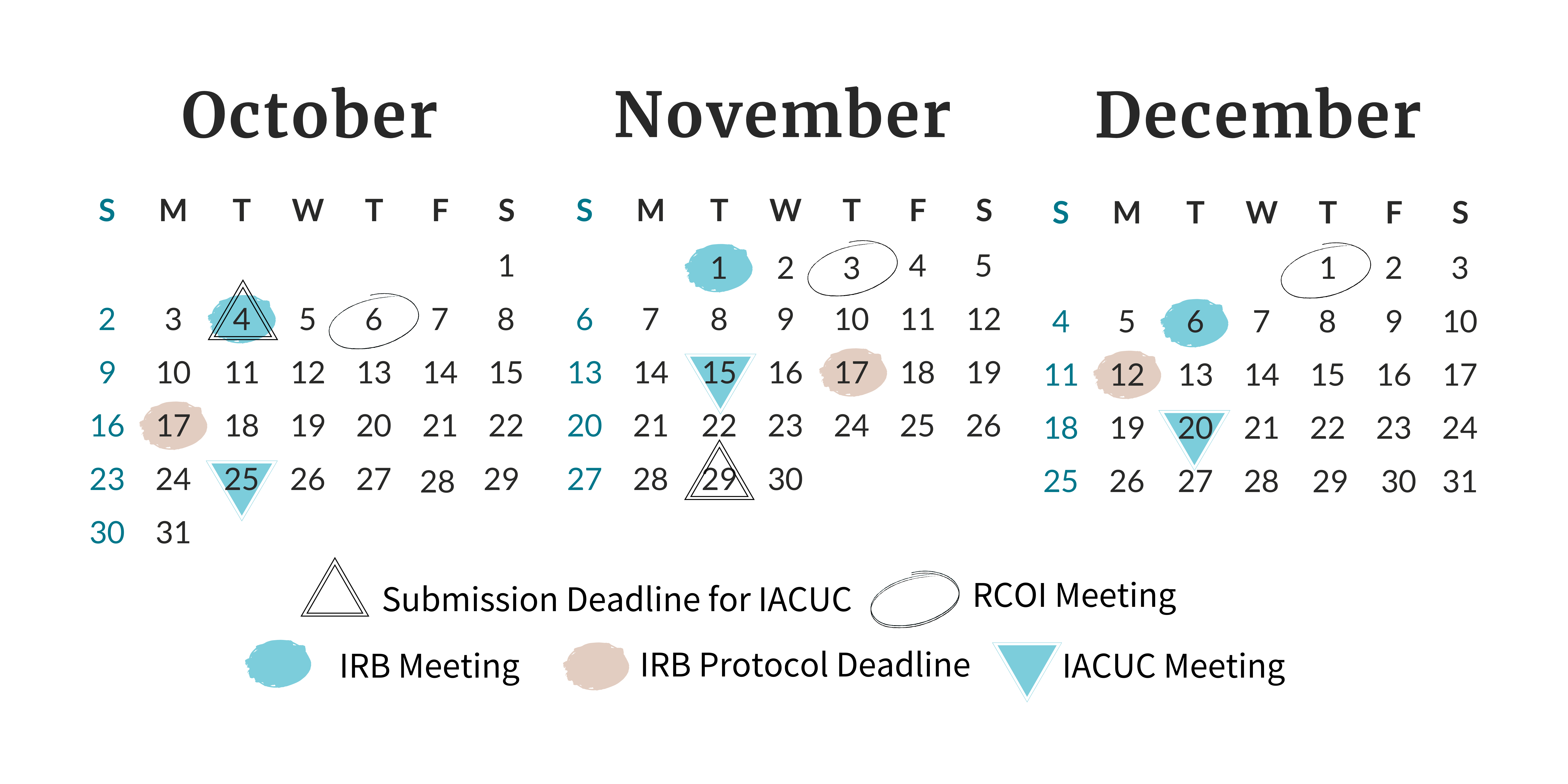
ORC Calendar
|