
ORC Student Research
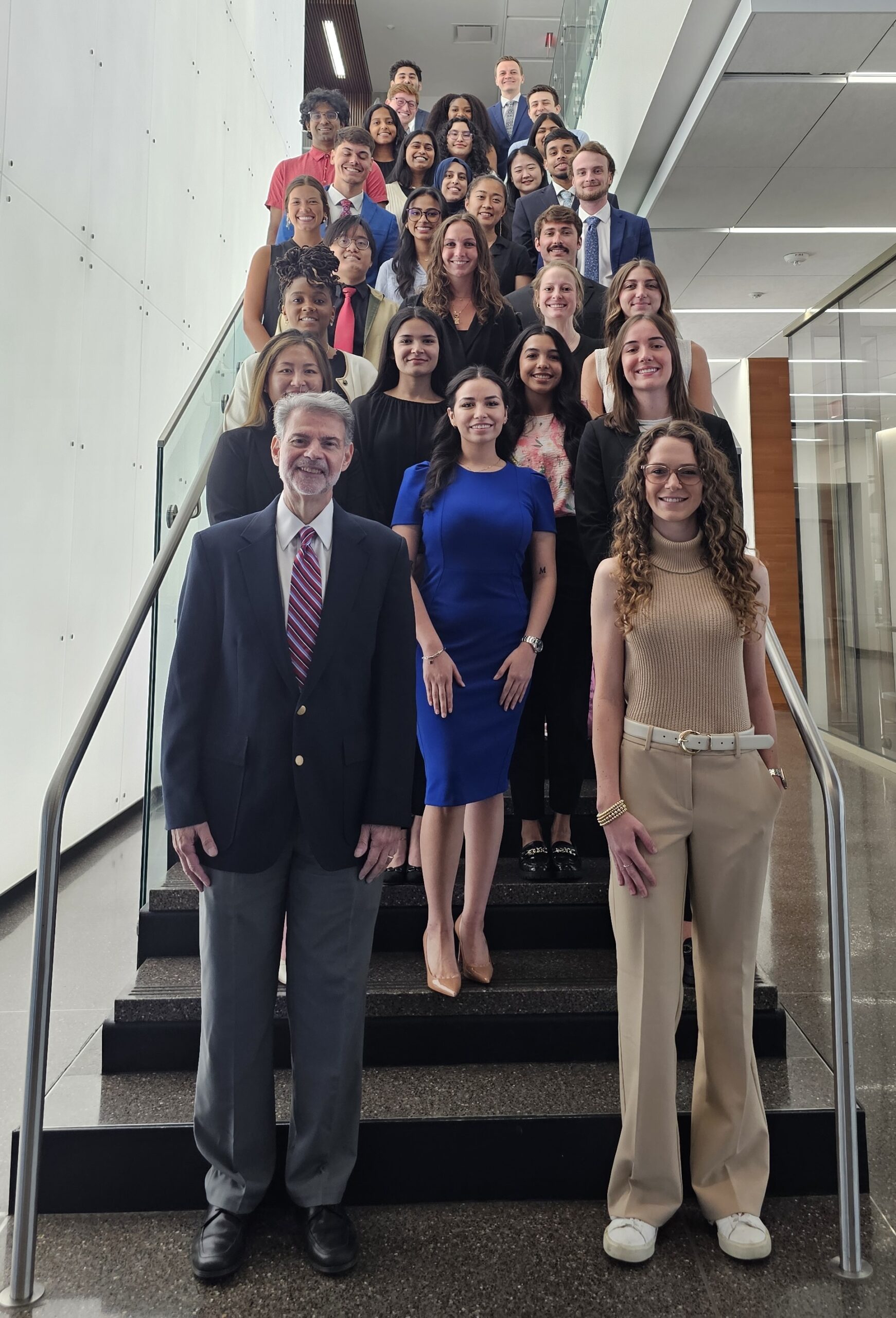
TCOM class of 2028 – Summer Program in Clinical Research 2025
Prospectus
PROGRAM DIRECTOR
- John C. Licciardone, DO, MS, MBA, FACPM
Regents Professor and Richards-Cohen Distinguished Chair in Clinical Research
Department of Family Medicine
MET-568
GOAL
- To promote competency in understanding the methodological foundations that facilitate
the conduct and critical evaluation of clinical research with an emphasis on patient-centered
studies
relating to chronic pain.
PROGRAM OBJECTIVES
- To receive a Certificate of Completion, each student must accomplish the following
during the Summer Program in Clinical Research (SPCR) within the context a group project:
- Perform literature searching pertaining to assigned group topics.
- Perform preliminary research design pertaining to group research assignments (in conjunction with the Program Director).
- Participate in assigned group oral presentations (required attendance).
- Present assigned Journal Club articles and critically evaluate their content (required attendance).
DIDACTIC SESSIONS
- Required didactic sessions generally will be scheduled for on-campus attendance weekday mornings from 9 am to 12 noon, from June 15 through July 1, 2026. A summary of daily topics in the SPCR will be provided. Dr. Licciardone will serve as the primary instructor. The schedule is subject to change based on unexpected contingencies, including use of remote didactic sessions (via Zoom) if needed. The SPCR requires full-time effort throughout the entire SPCR. Thus, students are prohibited from simultaneously participating in other summer research programs. Students are expected to be reading or working on program-related activities when not in didactic sessions.
READING MATERIALS
- The required textbook is Browner, et al. Designing Clinical Research, 5th, Lippincott Williams & Wilkins, 2023.
- Other required readings will be provided in Canvas.
PRACTICAL RESEARCH EXPERIENCE
- Students will gain practical experience in conducting clinical research within a group setting, including biomedical literature searching, clinical research design and planning, interpretation of preliminary data (if available), and oral presentations, under the supervision of the Program Director.
JOURNAL CLUB
- Students will gain proficiency in presenting and critically evaluating clinical research studies previously published in conjunction with the PRECISION Pain Research Registry, with the intent of adapting prior research methods to develop new projects.
ATTENDANCE
- Students must attend during the entire SPCR to receive a Certificate of Completion. Up to 2 sessions may be missed with approval from the Program Director. Additional absences will require a valid excuse for medical or other emergency reasons. Daily quiz questions may be used to monitor student attendance, participation, and learning.
PROPRIETY INTEREST AND CONFIDENTIALITY
- Osteopathic Research Center and PRECISION Pain Research Registry documents and data are considered intellectual property. Moreover, all research participant data are considered privileged information and are to remain confidential per Institutional Review Board guidelines.
CERTIFICATE OF COMPLETION
- A Certificate of Completion will be awarded by the Program Director to each student who successfully completes all requirements of the SPCR during Summer 2026.
SUMMER PROGRAM COST AND SUPPORT
- The SPCR is offered at no cost to students. Institutional resources are also provided at no cost, including access to required readings in Canvas, Health Sciences Library materials, and the IBM SPSS Statistics Software.
- Neither student stipends nor fringe benefits are available for the SPCR and students must acquire their own textbook.
SUBSEQUENT CLINICAL RESEARCH TRAINING
- Students who successfully complete the SPCR during 2026 will be eligible to continue to perform clinical research during the Fall 2026 and Spring 2027 semesters, under the direction of the Program Director.
- Research team objectives will include completing the assigned group research projects by ongoing meetings with the Program Director to refine research hypotheses, data and analyze data, draft and revise manuscripts, and submit manuscripts for publication in peer-reviewed biomedical journals. A bibliography of recent TCOM student publications and ongoing projects is provided at the end of this Prospectus.
Frequently Asked Questions TCOM Summer Program in Clinical Research
We offer the program to medical students who successfully complete their first year at the Texas College of Osteopathic Medicine in Spring 2026 (Class of 2029) because they will have time during their summer break to commit to research training. Students in TCOM who participate in other sponsored research programs during Summer 2026 will not be eligible for the program because it requires full-time effort.
No, the program is intended to provide training that will potentially facilitate the conduct and critical evaluation of clinical research in a variety of settings. However, teaching examples and projects will focus on chronic pain research conducted through the Pain Registry for Epidemiological, Clinical, and Interventional Studies and Innovation (PRECISION Pain Research Registry). This may include any of the following as they pertain to chronic pain treatment and outcomes: osteopathic medical care; impact of the patient-physician relationship; benefits and harms of opioid therapy; racial and ethnic health disparities; and other miscellaneous topics.
The application process involves an online form that is reviewed and evaluated by the Program Director and/or other faculty or staff.
The application form deadline is January 9, 2026. We anticipate making acceptance decisions by January 30, 2026. An accepted student must confirm his/her position within 5 business days. Any withdrawals after an acceptance is confirmed will adversely impact the program, potentially hampering our ability to select alternate students from the Class of 2029, and will be reported to the TCOM Dean and/or Associate Dean for Research.
There are no tuition costs or other fees for the program. Institutional resources are also provided at no cost, including readings in Canvas, Health Sciences Library materials, and the IBM SPSS Statistics Software. However, students must acquire their own textbook.
No, there are no stipends or fringe benefits provided.
The number of acceptances depends on the number and quality of applicants, and the current status of ongoing research projects within the Osteopathic Research Center. The number of accepted students in recent years has ranged from 8 to 30.
We require full-time effort throughout the entire Summer Program, including times when no formal didactic sessions are scheduled. The program is heavily “front-loaded” so it is critical that students participate in all scheduled activities, which normally occur weekday mornings and on selected afternoons. We understand that rarely a student may be unable to attend program activities because of illness or an unexpected emergency. However, unexcused absences may result in dismissal from the program. Students may schedule summer vacations and other extended leaves after July 1, 2026.
A student will successfully complete the Summer Program by participating in all scheduled sessions and assigned research activities involving the group project and journal club presentation(s). A Certificate of Completion will be provided during Summer 2026 to students who successfully complete the program.
No. The program focuses on preparing students to conduct substantive research projects involving full-length manuscripts that will be competitive for publication in biomedical journals. A bibliography of recent program publications and ongoing projects involving TCOM students is available in the Prospectus. Students seeking to present a poster should not apply for the program because the time and effort in so doing will undermine the primary focus of the program.
Yes, students who successfully complete the Summer Program will have the option of continuing to participate in their assigned group research project during Fall 2026 and Spring 2027 so that they may become authors on a journal publication.
Bibliography
- Licciardone JC, Ganta S, Goehring L, Wallace K, Pu R. Analysis of the patient-physician relationship, race, and pain control and physical
function among adults with chronic low back pain. JAMA Network Open. June 2022;5(6):e2216270.
- Schultz MJ, Licciardone JC. The effect of long-term opioid use on back-specific disability and
health-related quality of life in patients with chronic low back pain. Journal of
Osteopathic Medicine. September 2022;122(9):469-479.
- Licciardone JC, McDonald H, Yablon M, Ngo W, Cunanan Garza KA, Aryal S. Optimizing chronic pain management through patient engagement with quality-of-life
measures: a randomized controlled trial. J Osteopath Med. 2022;122(11):571-580.b
-
Licciardone J, Beal J, Fakes N, Herron B, Jacobs C, Vasudevan A. The role of pain hypersensitivity in development of chronic widespread pain: a retrospective cohort study. J Pain Manag. 2023;16(1):45-53.
-
Licciardone JC, Patel S, Kandukuri P, Beeton G, Nyalakonda R, Aryal S. Patient satisfaction with medical care for chronic low back pain: a pain research registry study. Ann Fam Med. 2023;21(2):125-131.
-
Licciardone JC, Moore S, Fix K, Blair LG, Ta K. Osteopathic manipulative treatment of patients with chronic low back pain in the United States: a retrospective cohort study. J Osteopath Med. 2023;123(5):259-267.
-
Licciardone JC, Kellerlee J, Joseph M, Mohammad MB, Kim KG, Jain J, Aryal S. The process and outcomes of chronic low back pain treatment provided by osteopathic and allopathic physicians: a retrospective cohort study. J Osteopath Med. 2023;123(8):385-394.c
-
Licciardone JC, Ibrahim M, Baker J, Thornton T, Vu S. Pain catastrophizing and risk of progression to widespread pain among patients with chronic low back pain: a retrospective cohort study. Musculoskelet Sci Pract. 2024;69:102886.
-
Licciardone JC, Rama K, Nguyen A, Prado CR, Stanteen C, Aryal S. Effectiveness of long-term opioid therapy for chronic low back pain. J Am Board Fam Med. 2024;37(1):59-72.
-
Licciardone JC, Miller CL, Nazzal AJ, Hernandez CT, Nguyen LH, Aryal S. Racial disparities in opioid use and lumbar spine surgery for chronic pain and in pain and function over three years: a retrospective cohort study. J Pain. 2024;25(3):659-671.
-
Licciardone JC, Tran Y, Ngo K, Toledo D, Peddireddy N, Aryal S. Physician empathy and chronic pain outcomes. JAMA Netw Open. 2024;7(4):e246026.
-
Licciardone JC, Van Alfen B, Digilio MN, Fowers R, Ballout B, Bibi Y, Aryal S. Impact of shared decision-making on opioid prescribing among patients with chronic pain: a retrospective cohort study. J Pain. 2024;25(11):104522.
-
Licciardone JC, Middleton CN, Aboutaj A, Allouche T, Siddiqui I. Communication and empathy within the patient-physician relationship among patients with and without chronic pain. J Osteopath Med. 2025;125(2):79-86.
-
Licciardone JC, Brownell E, Nwaichi U, Patel A, Do K. Longitudinal outcomes among patients with fibromyalgia, chronic widespread pain, or localized chronic low back pain. J Osteopath Med. 2025;125(8):405-415.
-
Licciardone JC, Digilio M, Aryal S. Shared decision-making and prescribing of opioid therapy for chronic pain. J Am Board Fam Med. 2025;38(2):275-289.d
-
Licciardone JC, Lewis H, Dahl K, Adams B, Aryal S. Chronic pain outcomes among patients treated by osteopathic vs. allopathic physicians: a 36-month follow-up study. J Osteopath Med. 2026;126(1):25-36.
-
Licciardone JC, Fortier N, Hall J, Diep S, Aryal S. The association of race and social disadvantage with chronic pain outcomes. Adv Patient Rep Outcomes. 2026;2:100316.
-
Licciardone JC, Meyer AS, Lau AC, Tabet A, Boody TT, Aryal S. Self-Efficacy as a prognostic factor for pain, disability, and quality of life in chronic low back pain: a 24-month cohort study. Pain Med. 2026; 27(4):481-492.
-
Licciardone JC, Fortier N, Aryal S. Association of clinical empathy with suicidal ideation among patients with chronic pain: target trial emulation. BJGP Open. 2025, online ahead of print.d,e
-
Licciardone JC, Mohanty A, Neff M, Patel P, Godiyal N, Aryal S. Social determinants of health and patient-level characteristics associated with opioid use for chronic pain. J Racial Ethn Health Disparities. 2025 online ahead of print.e
-
Licciardone JC, Harrington KM, Anagol AS, Peraza CE, Shaikh SF, Malik S, Aryal S. Long-term pain and function outcomes associated with lumbar spine surgery for chronic low back pain: a target trial emulation. Int J Spine Surg. April 2026; in press.e
- Licciardone JC, Raphi R, McKnight KN, Warnesuriye RN, Kim J, Black J, Aryal S. Long-term chronic pain outcomes among patients treated by osteopathic physicians: per-protocol analysis of a retrospective cohort study. J Osteopath Med. April 2026; in press.e
aStudent participants in the research teams are designated in bold.
bReceived the Clinical Research Award from the American Osteopathic Association in 2023.
cReceived the Clinical Research Award from the American Osteopathic Association in 2024.
dHonors Research Practicum Student Award project.
eFinal citation pending.
 Like us on Facebook – ORCresearch
 Follow us on LinkedIn – UNT Health Osteopathic Research Center
 Follow us on Instagram – @precision_pain_research