
Earth Day Celebration

Earth Day 2026: Choose to Reuse
Earth Day began in 1970 as a nationwide call to protect public health by safeguarding our natural resources. Since 2013, UNT Health Sustainability has carried on that tradition through our annual Earth Day Celebration, focused on supporting a healthy planet and healthy people. This year, our Earth Day Fair is on Tuesday, April 21st from 3 to 5:30PM in the MET Field. Highlights include:
- Free food and giveaways
- E-waste recycling, paper shredding, clothing swap, and book/puzzle drive
- Interactive booths and activities
- NEW THIS YEAR: Old branded item swap, craft supply swap, and clothing/shoe recycling (for items that are beyond reuse)
Click on the drop-down menus to learn how to get involved this year.
The Earth Day Fair on Tuesday, April 21st will highlight opportunities for reuse through a series of “swap” activities. Items will be made available free of charge to attendees, with any remaining materials donated to nonprofit organizations. You do not have to donate to participate. Collection for these swaps will be April 7-20th in the lobby areas of MET 1st, LIB 2nd, and IREB 1st.
This year’s swaps will include:
Old Branded Items:
Swag or materials featuring our previous logo will be available for anyone to take.
Unclaimed items will be donated to The Welman Project, supporting local teachers and helping keep usable goods out of the landfill. Questions
about what we'll take? Email sustainability@unthealth.edu.
Craft Supplies:
New or gently used craft supplies will be available to attendees. Leftover materials
will be donated to The Welman Project. Suggested items include fabric and sewing materials, yarn, buttons, ribbon, jewelry-making
supplies, beads, scrapbooking materials, craft paint, brushes, 3D printer filament,
and general craft supplies.
Please do not bring partial bottles of spray paint or glue, paint thinners, hazardous materials, tools, or anything dirty or moldy.
Clothing:
All types of clothing and shoes will be accepted. Professional attire and scrubs will
be directed to the Professional Resource Closet. Remaining items will be donated to The Center for Transforming Lives Resale Shop.
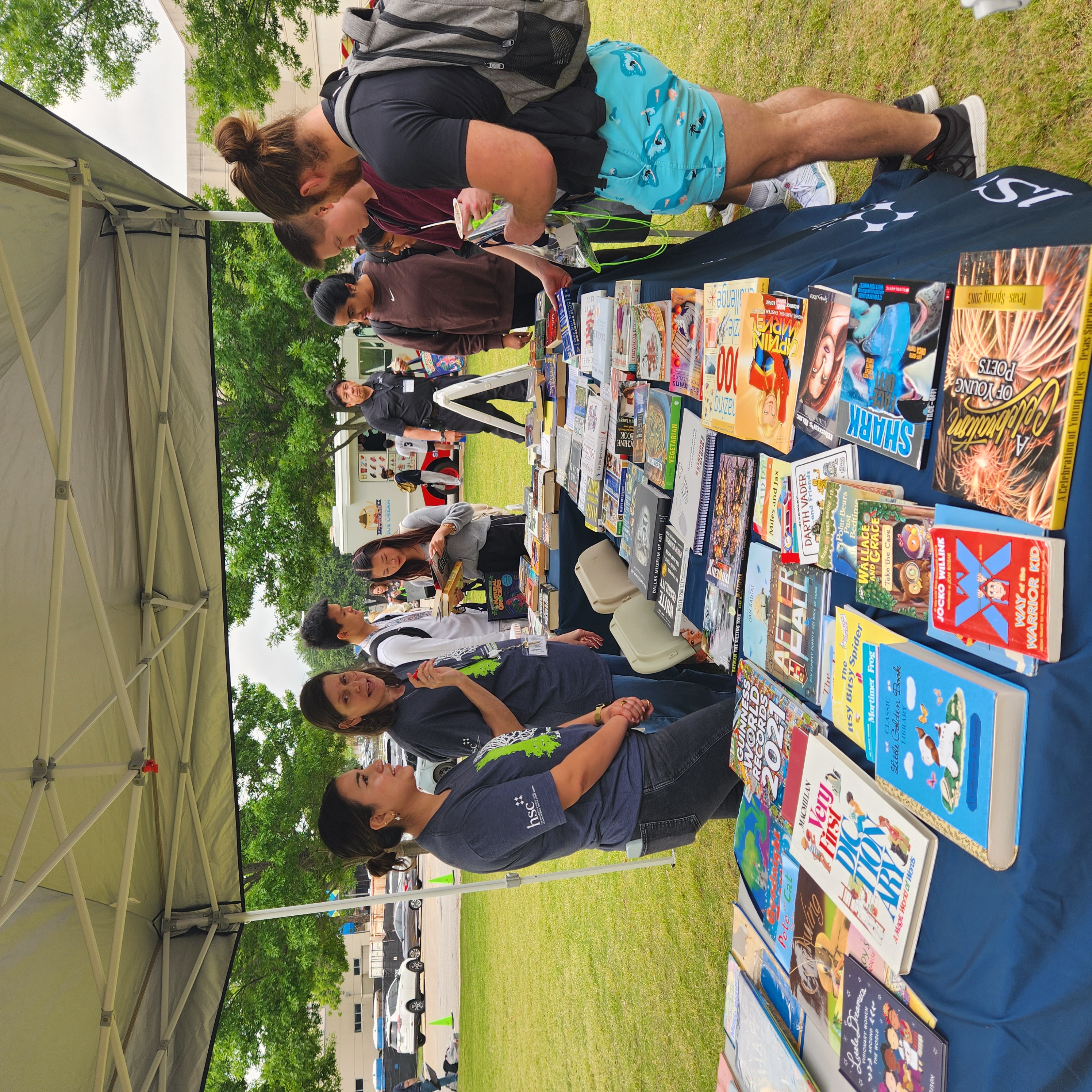
Books & Puzzles:
All types of books and puzzles will be collected and made available. This swap will
be hosted by Lewis Library. Remaining items will stock the Little Free Libraries on campus.
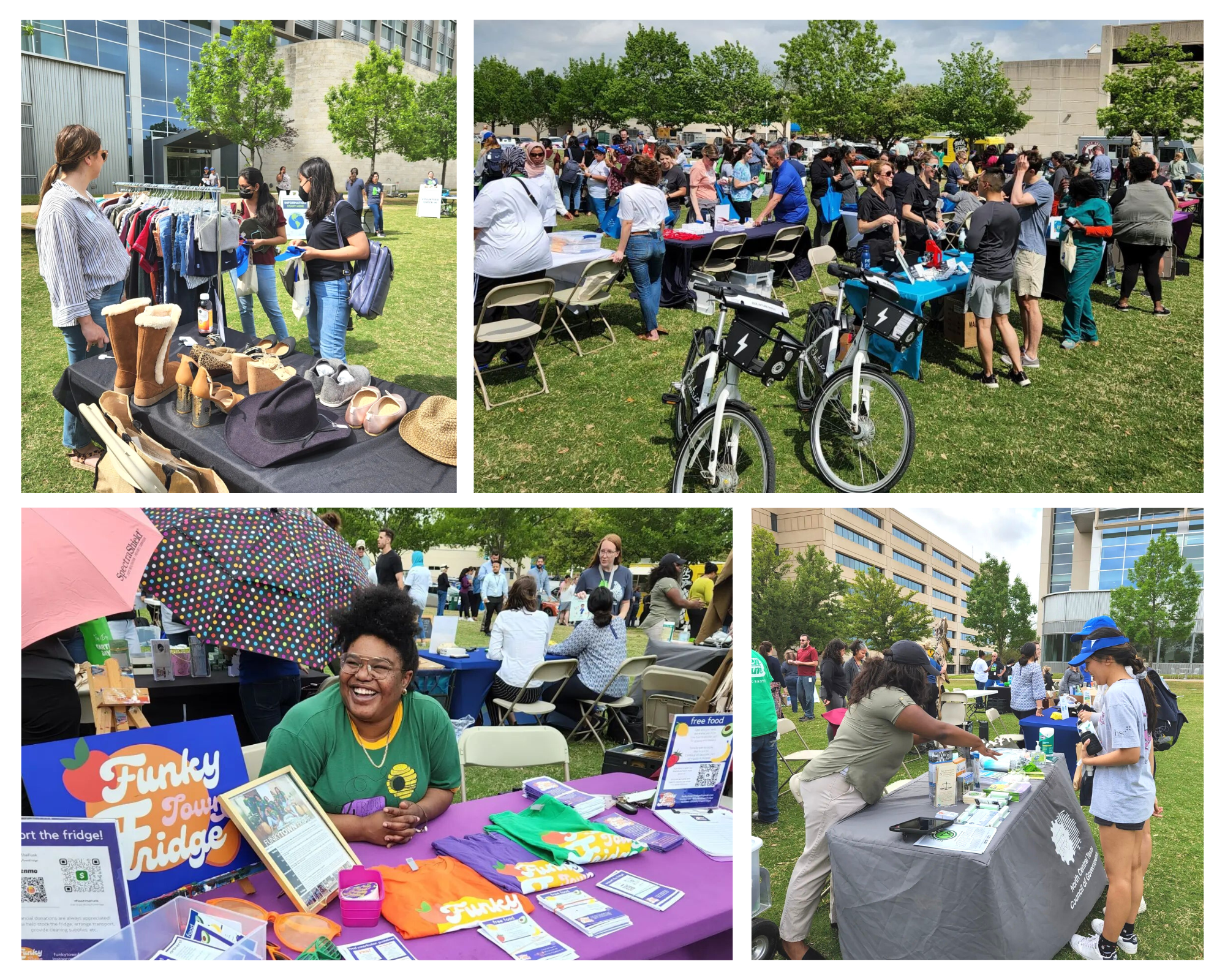 FREE Snacks & Drinks
- Bobaddiction Boba Tea
- Local, minority owned, vegan/vegetarian
- Tom's Coffee Truck
- Local, women-owned, plant-based options available
- Winters' Snow (shaved ice)
- Local, small batch, eco-friendly compostable cups, family owned
In order to get a free food or drink, you must collect three stamps from any activity at the event.
Interactive Booths & Activities
- Organizations and agencies from around the region and within our university
- "Life of Plastic" walking path with free utensil set
- Free giveaways and activities
FREE Electronic & Clothing Recycling & Paper Shredding
- Recycle general electronics, cables and cords, batteries and more
- Recycle clothing and shoes that are beyond reuse
- Full list of accepted items
- Only available during the event, and items will not be collected prior to the event
Clothing Swap & Professional Attire Resource Closet
- Bring clothing of all sizes, genders, and conditions including scrubs to donate, and take what you need
- Professional clothing and scrubs will be donated to the Professional Resource Closet (students can take that day)
- Items not taken will be donated to The Resale Shop (Center for Transforming Lives) that helps women and children in Fort Worth or recycled if in poor condition
- Collection will begin in mid-April.
Book & Puzzle Swap (Hosted by Lewis Library)
- Bring books and puzzles to share or take what you want
- Items left will be used to stock the Little Free Libraries on campus
- Collection will begin in mid-April
Group Meditation
- 15 minute group sessions at 3:45PM & 4:45PM
Student Food Pantry Donation
- Bring a pantry item to donate
- Most needed items: toiletries, pasta and breakfast items, canned goods, and healthy snacks
“Sustainability is the continued protection of human health and the environment while fostering economic prosperity and societal well-being.” (Fiksel et al. 2012). All videos can be found on the UNT Health Sustainability Playlist.
Lifestyle, Health, & Kids
- Why Should Health Care Professionals Care About Climate Change? – Dr. Amy Collins, a practicing emergency medicine physician, health care sustainability professional, and senior clinical advisor for Health Care Without Harm shared spoke about why health care professionals should care about climate change. (56min)
- Practicing Sustainability with Kids – Learn easy ways you can practice sustainability with your kids in this quick video. (10min)
- Environmental, Cultural, Health, & Financial Impacts of Menstruation & Actions We Can Take – Learn about the cultural, health, and financial challenges women face as well as the environmental impacts of menstruation (60min).
- Caring for People & Planet Through Social Enterprises – Social enterprises are businesses that utilize market-based approaches to address social and/or environmental issues. Jenna Babbitt, Director of Social Enterprise for the Center for Transforming Lives, spoke about how social enterprises can improve both human and environmental health in various ways.
Food & Gardening
- Cooking 101: Basic Cooking Skills for a Healthier You and Healthier Planet – By learning basic cooking skills, you can decrease your consumption of processed food which has positive health and environmental impacts. Jeka Sisco, Blue Zones, performs a cooking demo to show you basic skills with a plant-based meal. (53min)
- Growing Food as Activism – Explore why food sovereignty is essential in addressing racial inequalities. (37 min)
- Sustainability in the Kitchen – What we eat and how we buy, eat, and store our food affects our own health and the health of the planet. Learn ways you can be more sustainable with your food. (10min)
- Food Waste & Composting: A Conversation with Cowboy Compost – Learn about why food waste matters, why composting is important, and opportunities available here in Fort Worth. (47min)
Sprouting Change: You, Food, & the Environment
A series of educational and how-to videos for the Sprouting Change: You, Food, and the Environment grant project.
- How to Grow Your Own Sprouts – Learn how to grow your own nutritious sprouts in an easy, convenient, inexpensive, and quick way. Kits will be available at the UNT Health Earth Day Event! (6min)
- Sprout Recipes – Learn a couple recipes using sprouts. (3min)
- Composting 101 – Composting is one of the best ways to reduce your impact on the environment. This video details how composting works and how to build a compost pile. (3min)
- Food Storage 101 – Learn how to properly store your food to extend the life of food and reduce waste. (5min)
- Container Gardening 101 – Learn how to grow edible plants in small spaces using 1, 2, and 5 gallon containers. (3min)
Reduce – Reuse – Recycle
- Recycling 101 and Putting the Other R’s Into Practice – Here we discuss the basics of recycling including what we recycle on campus and how you can practice the other R’s – Reducing and Reusing. (12min)
- Greening Your Closet & Helping Those In Need in Tarrant County – Learn how to make your wardrobe more sustainable as well as how to help women and children experiencing poverty here in Tarrant County (32min).
At UNT Health
- 10 Tips from YOUR Sustainability Committee – UNT Health's Sustainability Committee was established in 2012. Here representatives from the committee give 10 tips on how to be more sustainable. (5min)
- Sustainability in Our Labs – The Lab Efficiency Action Program (LEAP) encourages labs to be more sustainable. Learn about the program and hear from researchers across campus. (4min)
- Coming Back to Campus the Sustainable Way – As UNT Health moves toward being more in person from the pandemic, why not come back in a better, more efficient and sustainable way? Learn 10 tips for coming back to campus the sustainable way. (8min)
Nature Walk
Spend some time outdoors this month. Here are some resources in our area:
- Fort Worth Botanic Garden – Close to campus, this place aims to be a “beacon of conservation”.
- Nature Trails – Use this site to find a trail near you.
Litter Cleanup
Litter on the ground eventually gets in our waterways causing issues for the environment, wildlife, and ourselves (ever heard of microplastics in tap water?). Here are some resources:
- Need supplies? Contact UNT Health Sustainability for bags and gloves.
- Keep Fort Worth Beautiful (or your local affiliate) has resources and events as well.
Bike Ride
There are many places to ride a bike in our area. See resources below.
- Beginner’s Guide to Biking in DFW
- Fort Worth Bike Sharing – a city-wide network of bike stations. UNT Health students receive FREE annual memberships and employees receive $40 annual memberships. Register using your UNT Health email address (students use promo code “untstudent” and employees use “untemployee”.
- Bike DFW – Promotes cycling in our area and has many resources.
Eco-activity with Kids
Get your kids involved with Earth Day activities and do them together.