
Reduce – Reuse – Recycling

Many people think of recycling first when it comes to sustainability. While recycling is worthwhile and important, it is more effective to reduce waste in the first place. By prioritizing reduction and reuse, and recycling correctly when necessary, we can all help create a healthier and more sustainable campus. UNT Health Sustainability focuses on this simple framework:
- Reduce - Purchase and use less
- Reuse - Extend the life of things we use
- Recycle - Properly manage materials after we've used them
When we choose to reduce what we use in the first place, we conserve resources, decrease pollution, and minimize waste.
Simple Ways to Reduce Waste on Campus:
- Focus on Reusables. We have more than 60 quick-fill water stations on campus that deliver cold, filtered water in a touchless manner. Make a commitment to use your own reusable water bottle and utensils at meetings, lunch events and really everywhere you go rather than sinble use items (learn more about the impact of plastic on wildlife and human health). Also, bring your own coffee mug to campus. Disposable coffee cups are not recyclable due to their mixed material.
- Print Less. Printing uses paper, ink, energy, and other resources, so try to print only when necessary. Whenever possible, share agendas and other documents electronically instead of printing copies for everyone. If printing is needed, print double-sided or multiple pages per sheet. You can also ask IT to set shared printers to print double-sided by default.
- Purchasing Decisions. Before making a purchase ask yourself:
- Can we borrow it?
- Is there a reusable option?
- Is there a product with less packaging?
- Do we really need it?
Before throwing something away, consider whether it can be used again. Reusing products extends their lifespan and reduces the need to manufacture new items.
Simple Ways to Reuse on Campus:
- Ask Property Control First. Items purchased by the university and no longer wanted or needed are managed by Property Control. They have a wide-range of furniture, equipment, and supplies to go back on campus or to buy for personal use through the Surplus Storefront.
- Events. Thoughtful choices about decorations and event materials can significantly reduce
waste and our environmental impact. Choose decorations that can be reused year after
year or repurposed afterward. Other ways to reduce include:
- Use reusable name tags and collect them afterwards.
- Design signage withouh event specific dates or use sign systems with replaceable inserts so materials can be reused for recurring events.
- Focus on Reusables. Like mentioned in the tab above, you can significantly reduce your waste by focusing on reusable items like a water bottle, coffee mug, and utensils.
When an item can no longer be reduced or reused, recycling helps recover valuable materials and keeps them out of landfills. However, recycling only works when the right materials are placed in the correct containers.
Recycling Opportunities at UNT Health
Co-mingle Recycling
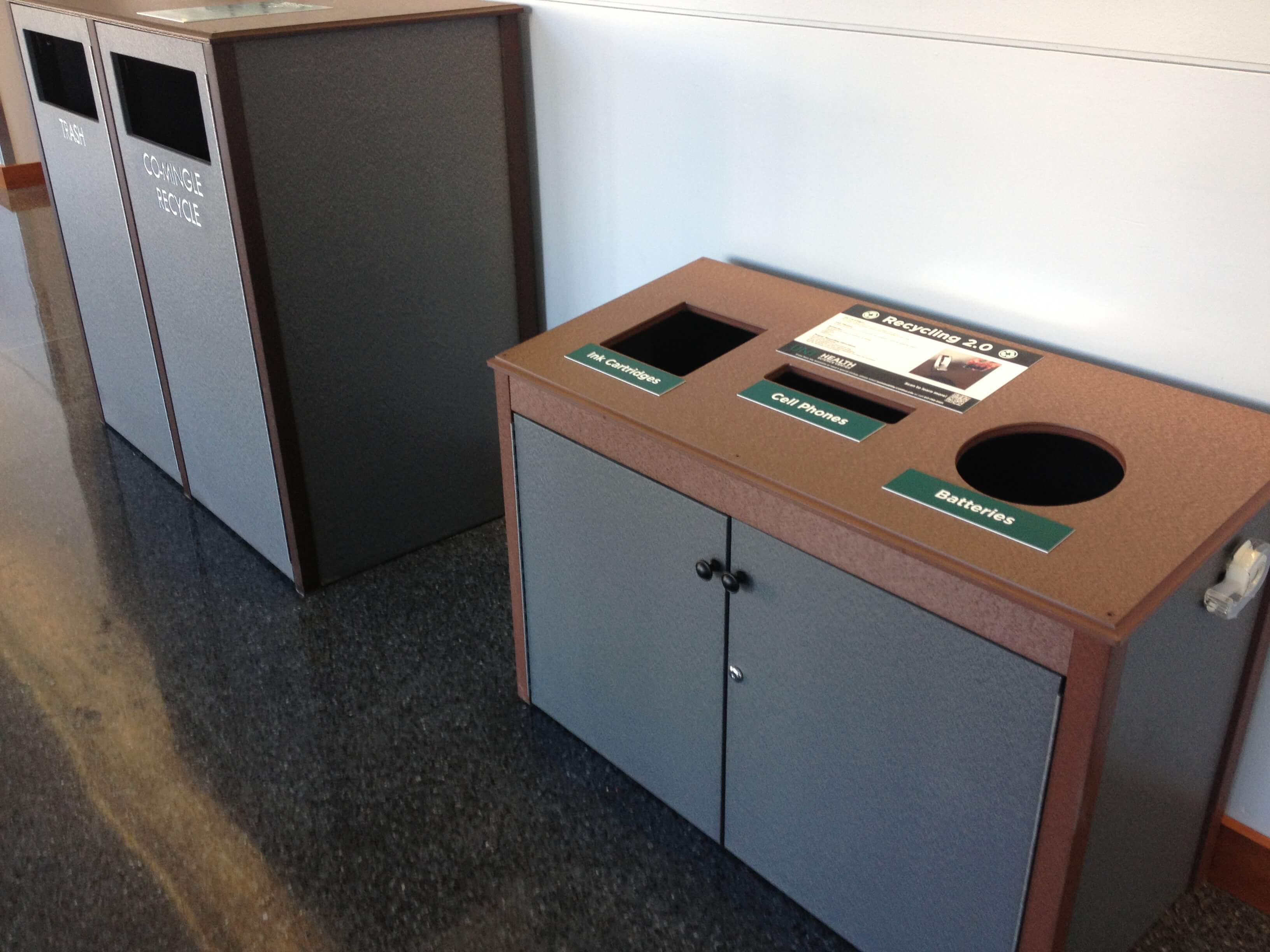
General co-mingle recycling bins are located throughout campus with landfill receptacles. These bins (including small, blue office bins) accept a variety of recyclable materials, including:
- Plastic bottles, cups, and containers (empty and free of food and liquids)
- Paper, paperboard, magazines, and flattened cardboard
- Aluminum and steel (tin) cans
- Glass bottles
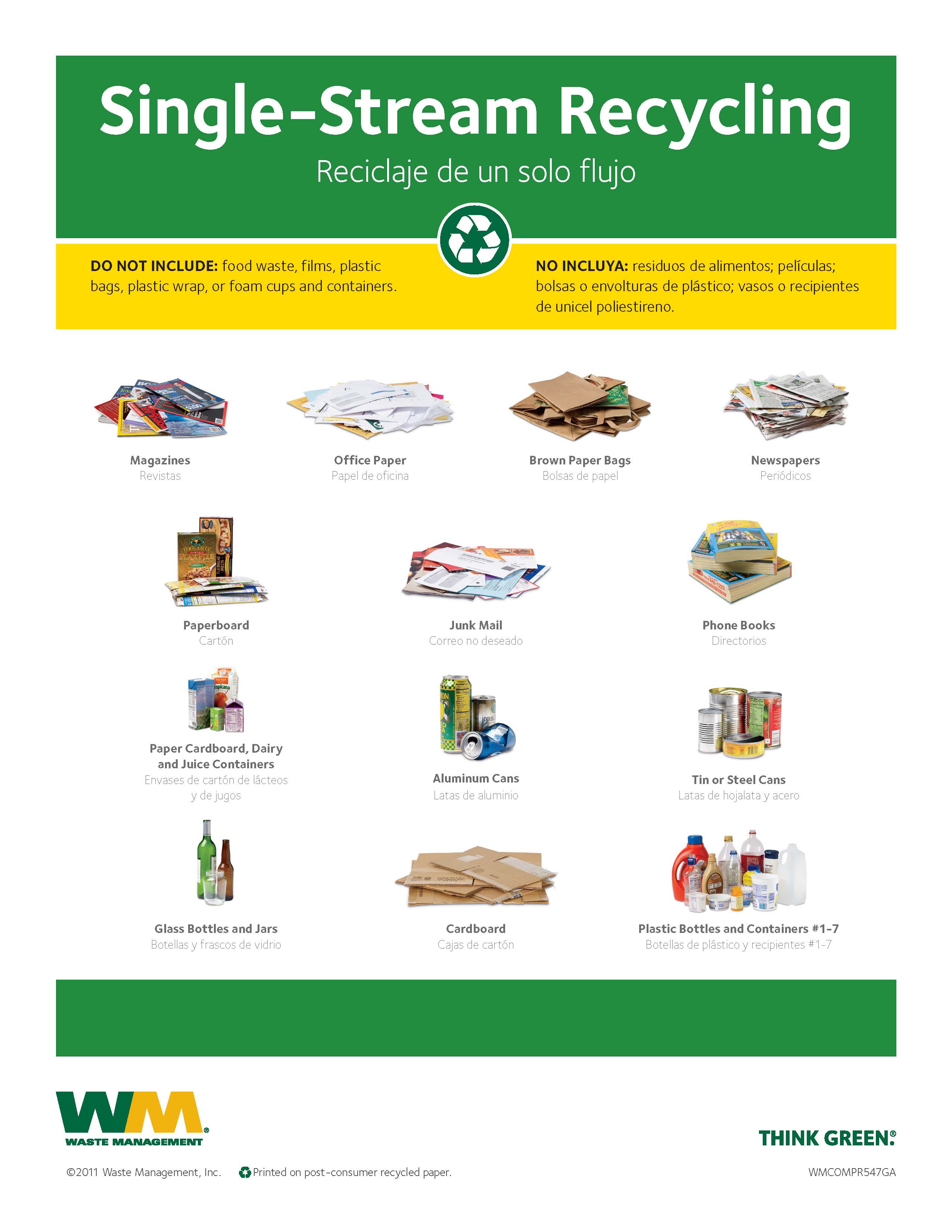
The following items should not be placed in campus recycling bins:
- Paper towels and tissues
- Laboratory glassware
- Styrofoam
- Plastic bags
- Plastic film and wrap
- Food waste
- Batteries*
- Ink cartridges and toner cartridges*
These items can contaminate recyclable materials and may require special disposal or recycling methods.
* These materials can be recycled as part of our Recycling 2.0 program which has separate receptacles in the MET by cafe, IREB lobby, and LIB 2nd floor lobby.
Increasing Recycling Efficiency and Accountability
Facilities Management is continually working to improve the effectiveness and transparency of the university's recycling program. While custodial staff collect both recycling and landfill waste during the same service route, the materials are kept separate and deposited into their designated dumpsters.
To help ensure proper handling, recycling bags are bright blue while landfill bags remain black or white. This color-coding serves as a visual reminder for custodial staff and provides accountability that materials collected from recycling containers are being placed in the appropriate recycling dumpster. If you ever observe recyclables and landfill waste being combined, please report it to Brenda Martinez, Custodial Manager, so the issue can be reviewed and addressed.
In November 2012, UNT Health expanded our university’s recycling program to include ink cartridges, cell phones and batteries through a partnership with Universal Recyclers Technologies. You can either send these items by interoffice mail to "SUSTAINABILITY" in the Operations Building or place in the Recycling 2.0 receptacles located in the MET cafe area, Library 2nd floor lobby, or IREB 1st floor lobby. If you require a special pickup, please email the UNT Health Sustainability at sustainability@unthealth.edu.
Ink Cartridges & Toners
We accept all types and sizes of ink cartridges and toners. If sending by interoffice mail, please leave the larger cartridges/toners in their original box to minimize ink leakage. You can place smaller cartridges/toners in an envelope.
Cell Phones
All types of cell phones and accessories are accepted. Please leave the batteries intact. If a group on campus has a collection event for cell phones, the Office of Sustainability would be happy to donate any collected cell phones to the cause.
Batteries
We accept most types of batteries including: alkaline, lead acid, lithium, NiMH and NiCd.
Other Recycling on Campus
Sustainability partners with other departments to recycle items that are not part of our co-mingle recycling program or Recycling 2.0. Examples of other items include lamps and ballasts, TVs and monitors, miscellaneous electronics, and more. We also donate to The Welman Project when possible.
Drug-Take Back Program
In its commitment to providing for a safe community, the UNT Health Police Department collects unused/expired medications and more in a drop box located in the lobby of the Police Department. Medications and drugs improperly disposed of pose environmental and human health risks (learn more at disposemymeds.org).
Please see below for what is and is not accepted. Loose pills should be placed in a plastic bag provided at the bin. As needed, the drop box will be emptied by a police officer and all medications will be securely transported to an appropriate disposal facility in accordance with the Texas Controlled Substances Act.
| Items Accepted | Items Not Accepted |
| Prescriptions | Hydrogen peroxide |
| Prescription patches | Thermometers |
| Prescription medications | Inhalers |
| Prescription ointments | Needles or other sharps |
| Over-the-counter medications | Medication from businesses or clinics |
| Vitamins | Aerosol cans |
| Samples | Ointments, lotions or liquids |
| Medications for pets | Illegal substances |
See the Drug Drop Box Program for what they accept and more specifics.
Eyelasses Donation Program
Donate gently used eyeglasses through a partnership with NTERI and Lions Club International in bins located throughout campus. Learn more here.
What Else Can I Do?
Striving to be sustainable and conserving our natural resources is about more than recycling. Want to do more? Here are some ways to go beyond the bin:
- Take Action
- Become Part of the Conversation – Follow or Like us on Instagram or Facebook
- Make a Suggestion - Contact us here.