
Community
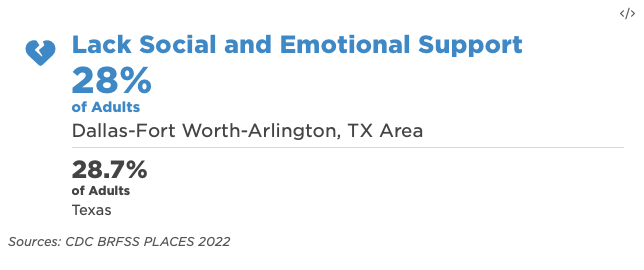
Community is about building supportive, connected environments that empower people to care for one another. When individuals feel a sense of belonging and shared purpose, they are more likely to engage in healthier behaviors, experience lower stress levels and recover faster from illness.
Strong community ties are a powerful determinant of health and well-being. Research consistently shows that individuals who are connected to supportive social networks experience lower rates of chronic disease, reduced stress levels and better mental health outcomes. These connections foster a sense of belonging, increase access to resources and provide emotional and practical support during times of need. Communities with strong social bonds also tend to have higher rates of civic engagement, safer environments and greater resilience in the face of challenges. Over time, these factors contribute to improved quality of life and longer life expectancy, underscoring the vital role that social connection plays in overall health.
People living in low-resourced communities facing systemic barriers are significantly more likely to develop serious health conditions compared to those in more resourced areas:
High blood pressure: 14% more likely
Diabetes: 12% more likely
High cholesterol: 9% more likely
Chronic kidney disease: 17% more likely
Smoking habits: 5% more likely
Heart disease: 15% more likely
While a person can make individual behavior changes to improve their health, they are limited by what they have access to. For example, walking just 30 minutes a day for five days of the week has a plethora of health benefits including the prevention of chronic disease, improved bone and muscle health, weight management and even increased brain power and improved mental health.
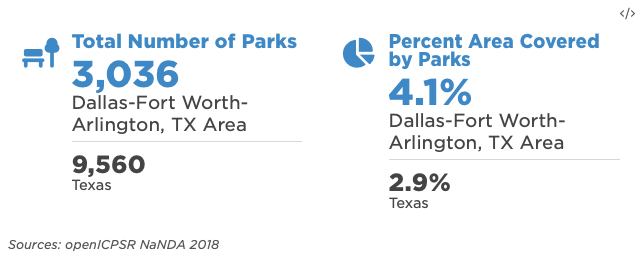
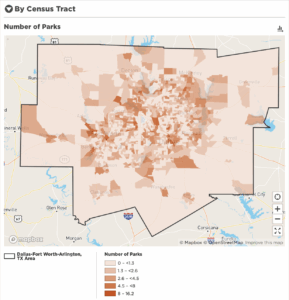
Follow the thumbnail to the numbers of parks with Dallas-Fort Worth Metropolitan. You can toggle between maps and mouse over regions to view the numbers of parks of places (cities), neighborhoods, zip codesand census tracks.
Area Dedicated to Parks
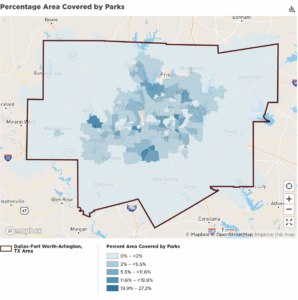
Follow the thumbnail to areas dedicated to parks with Dallas-Fort Worth Metropolitan. You can toggle between maps and mouse over regions to view areas dedicated to parks of places (cities), neighborhoods, zip codesand census tracks.
An individual’s decision to commit a violent crime is informed by many factors, including past trauma. Trauma can be associated with higher levels of violence. This might start with addressing poverty, unemployment or access to safe housing.
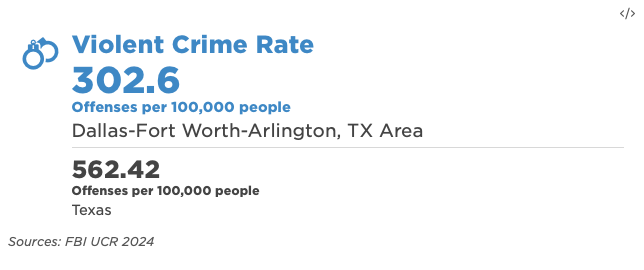
Risk Factors for Violence
While a person can make individual behavior changes to improve their health, they are limited by what they have access to. For example, walking just 30 minutes a day for five days of the week has a plethora of health benefits including the prevention of chronic disease, improved bone and muscle health, weight management and even increased brain power and improved mental health.
Follow the thumbnail to the numbers of parks with Dallas-Fort Worth Metropolitan. You can toggle between maps and mouse over regions to view the numbers of parks of places (cities), neighborhoods, zip codes and census tracks.
Area Dedicated to Parks
Follow the thumbnail to areas dedicated to parks with Dallas-Fort Worth Metropolitan. You can toggle between maps and mouse over regions to view areas dedicated to parks of places (cities), neighborhoods, zip codes and census tracks.

Areas people had to travel the farthest for healthcare had higher death rates. Counties where the nearest health center was more than 5.5 miles away had about 4% more deaths compared to those with closer access to health care. In some counties, death rates were 7% to 33% higher for people who lived farther from medical care, depending on the area.
Distance From Healthy Food
What Does This Data Mean?
This dataset contains the percent of people living a far distance (i.e, more than
1/2 mile in urban areas and 10 miles in rural areas) from a healthy food source. Low
access to healthy food is defined as a significant number of individuals within the
geography being far from a supermarket, wholesale club, supercenter or grocery store.
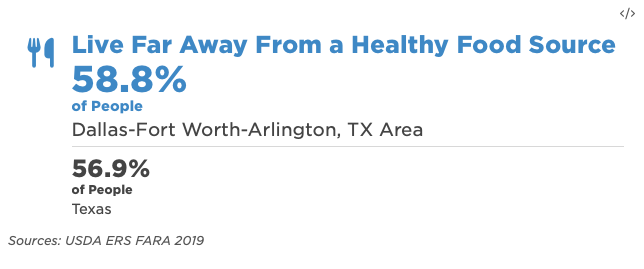
People Who Live Far Away From a Healthy Food Source
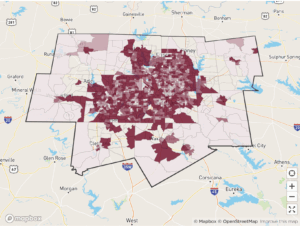
Follow the thumbnail to see the percentage of people who live far away from a healthy food source. You can toggle between maps to view the data across places (cities), neighborhoods, zip codes and census tracks.
Walkability Indicator
Walkability is a measure used to characterize the ease of pedestrian travel in an area. The index ranges from 1-20, with lower values being less walkable locations and higher values being more walkable.
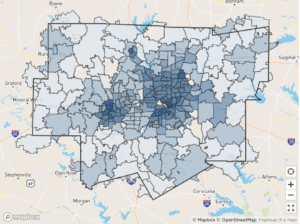
Follow the thumbnail to the walkability with Dallas-Fort Worth Metropolitan. You can toggle between maps and mouse over regions to view the walkability of places (cities), neighborhoods, zip codes and census tracks.