Mental Health
Mental health is the emotional, psychological, and social foundation of how we think, feel, and act. It influences how we cope with stress, build relationships, make decisions, and engage with our community.
Mental Health
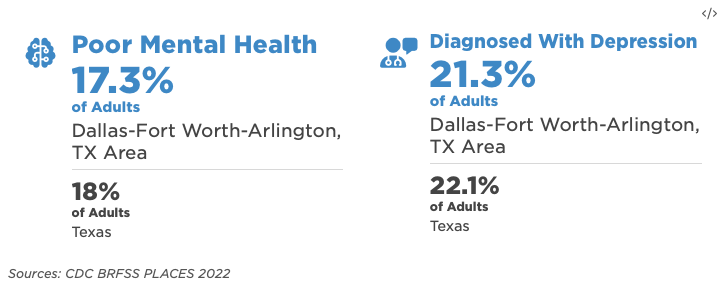
Diagnosed Depressive Disorder – Dallas–Fort Worth Region

People with depression have a 40% higher risk of developing cardiovascular and metabolic diseases.
Adults Diagnosed With Depression
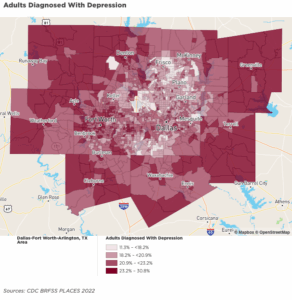
Follow the thumbnail to see the percentage of adults diagnosed with depression. You can toggle between maps and mouse over regions to view the adults diagnosed with depression of places (cities), neighborhoods, zip codes and census tracks.

Between 51% and 98% of people with Serious Mental Illness (SMI) have experienced trauma—far more than the general population.

Where people had to travel the farthest for healthcare had higher death rates. Counties where the nearest health center was more than 5.5 miles away had about 4% more deaths compared to those with closer access to health car. In some counties, death rates were 7% to 33% higher for people who lived farther from medical care, depending on the area.
Mental Health Provider Ratio
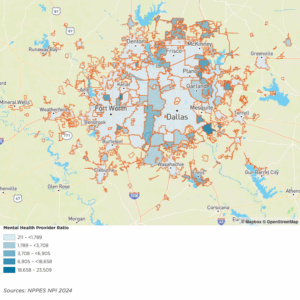
Follow the thumbnail to see the ratio of people per 1 mental health care provider practicing. You can toggle between maps and mouse over regions to view the ratio of people per 1 mental health care provider practicing of places (cities), neighborhoods, zip codes and census tracks.
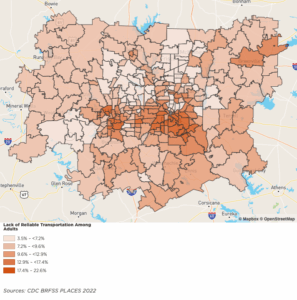
Lack of reliable transportation
Lack of reliable transportation are those adults who reported that “a lack of reliable transportation keeping them from medical appointments, meetings, work, or from getting things needed for daily living in the past 12 months.