Physical Health
Physical Health
Embracing nutrition, fitness, activity and sleep as components of the whole person.
What is a Health Indicator?
A measurable variable that reflects the state of health, determinants of health, or performance of a health system, and can be used to monitor progress over time or compare across populations.
What is a Physical Health Indicator?
A physical health indicator is a measurable variable that reflects workforce physical well-being, disease status, and engagement in preventive care. For example, Obesity prevalence, diabetes/hypertension rates, percentage meeting physical activity guidelines, percentage with annual checkups.
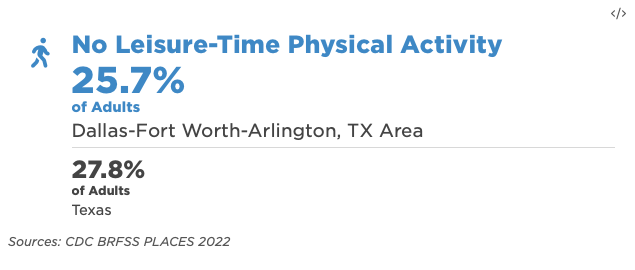
Just 150 minutes of physical activity per week can lower your risk of death from any cause by 33%.
That’s only 22 minutes a day—less time than one episode of your favorite show.
No Leisure-Time Physical Activity Among Adults
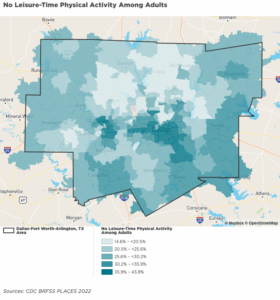
Follow the thumbnail above to view the No leisure activity among adults with Dallas-Fort Worth Metropolitan. You can toggle between maps and mouse over regions to view No leisure activity among adults of counties and zip code of DFW and Texas.
Exercise can also be seen under Self-Care. Click link to see the bridge between the 2 dimensions.
Living near fast-food restaurants can increase the chances of obesity by 15%, while access to supermarkets and produce vendors can reduce obesity risk by 7–10%.
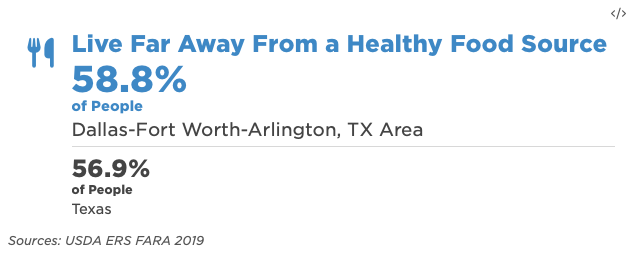
People with very low food security have a 32% higher risk of dying from any cause and a 53% higher risk of dying from heart-related problems.
Learn More
A 2023 study of over 725,000 patients at U.S. community health centers found that many people develop more than one chronic illness earlier in life.
Adults who Received a Doctor’s Checkup in the Past Year
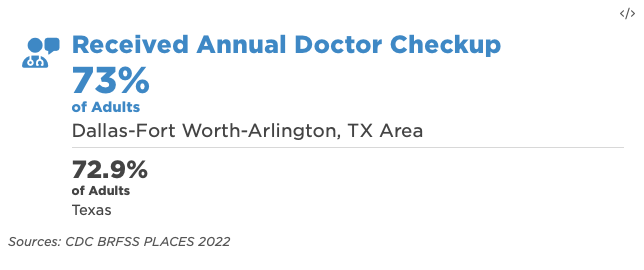
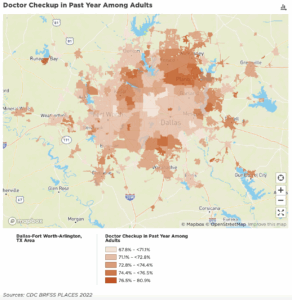
Follow the thumbnail above to view the Lung/bronchus death rate with Dallas-Fort Worth Metropolitan. You can toggle between maps and mouse over regions to view areas dedicated to parks of counties of DFW and Texas.
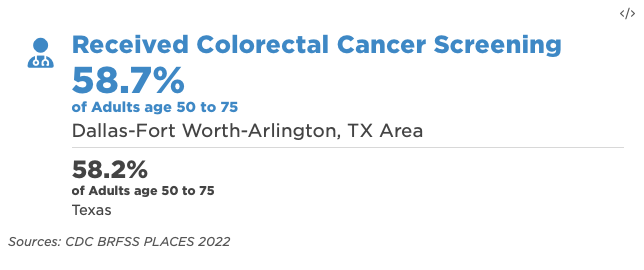
Colorectal Cancer Screening Among Adults
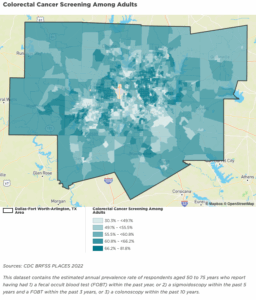
Follow the thumbnail above to view the Colorectal Cancer Screening with Dallas-Fort Worth Metropolitan. You can toggle between maps and mouse over regions to view Colorectal Cancer Screening of census tract, zip Codies, cities, and counties of DFW and Texas.
Preventive Care Utilization Table
Cognitive Difficulty Disability
The Census defines a disability as “a long-lasting physical, mental, or emotional condition. This condition can make it difficult for a person to do activities such as walking, climbing stairs, dressing, bathing, learning, or remembering. This condition can also impede a person from being able to go outside the home alone or to work at a job or business”
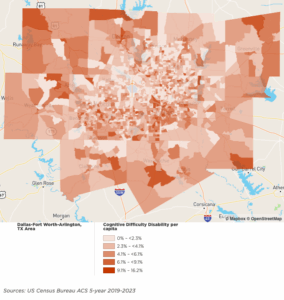
Follow the thumbnail above to view the Lung/bronchus death rate with Dallas-Fort Worth Metropolitan. You can toggle between maps and mouse over regions to view areas dedicated to parks of counties of DFW and Texas.
The #1 cause of death in the U.S. Includes coronary artery disease, heart failure, hypertension-related disease, and stroke.
Adults With Coronary Heart Disease
Coronary heart disease (also called ischemic heart disease) is caused by plaque buildup on the arteries. These blockages can limit the amount blood and oxygen the heart receives causing cause chest pain or angina.
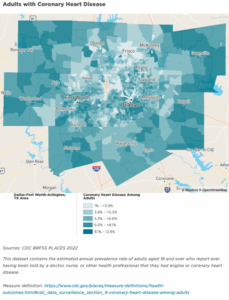
Follow the thumbnail above to view the Lung/bronchus death rate with Dallas-Fort Worth Metropolitan. You can toggle between maps and mouse over regions to view areas dedicated to parks of counties of DFW and Texas.
Blood pressure is the pressure that occurs when blood pushes against the walls of your arteries. About 1 in 4 adults with high blood pressure has their blood pressure under control (22.5%, 27.0 million). Having high blood pressure puts you at risk for heart disease and stroke, which are leading causes of death in the United States.
The second leading cause of death is cancer. Common cancers: breast, prostate, lung, colorectal.
A meta-analysis of 27 cohort studies found that inviting women to get screened for breast cancer reduced their risk of dying from the disease by 22%. But among women who actually attended the screening, the impact was even greater, mortality dropped by nearly 30%.
Malignant neoplasms (ICD-10: C00-C97) accounted for 608,371 deaths (18.5 % of total deaths) among U.S. adults in 2022. Overall cancer death rates continued to decline among men, women, children, and adolescents and young adults in every major racial and ethnic group in the United States from 2015 to 2019. Among people who develop cancer, more than 69% will be alive in 5 years. Yet, cancer remains a leading cause of death in the United States, second only to heart disease.
Cancer Among Adults (except skin)
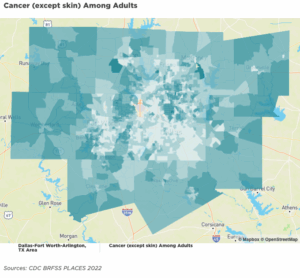
Follow the thumbnail above to view the Lung/bronchus death rate with Dallas-Fort Worth Metropolitan. You can toggle between maps and mouse over regions to view areas dedicated to parks of counties of DFW and Texas.
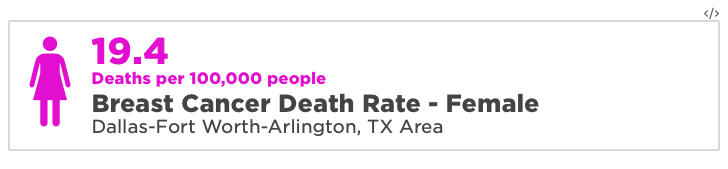
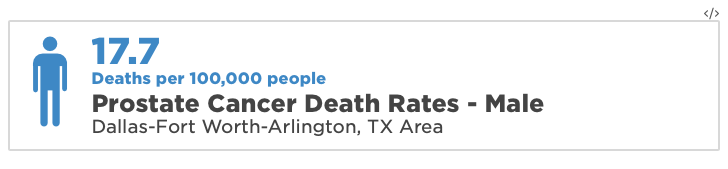
Breast and Prostate Cancer
Breast cancer remains the most commonly diagnosed cancer among women in the United
States (excluding non-melanoma skin cancer). According to recent data, approximately
130.8 new cases per 100,000 women were recorded nationally. In 2025, U.S. estimates project roughly 316,950 new invasive
breast cancer cases and 42,170 female deaths from the disease.
In Texas, women are projected to receive about 20,319 new breast cancer diagnoses
in 2023, making it the most frequently diagnosed cancer among Texas women.
Prostate cancer is the most frequently diagnosed non-skin cancer among men in the U.S., accounting
for approximately 30 % of new male cancer diagnoses in 2025 (estimated 313,780 new
cases) and 35,770 deaths. National data show that in 2022, 255,395 new prostate cancer cases were reported, and in 2023 there were 33,881 deaths among U.S. men.
In Texas, recent figures show an incidence lifetime risk of approximately 103.4 per
100,000 men and in 2023 about 17,230 new cases.
Type 2 diabetes is the most common and strongly tied to obesity and lifestyle factors. Increases risk for kidney disease, blindness, and cardiovascular complications
A national analysis of rural U.S. populations found that lifestyle programs (diet and physical activity) in rural settings were associated with reduced risks of chronic diseases like obesity, hypertension, diabetes, and breast cancer.
Adults Diagnosed With Diabetes
In 2022 in the U.S., 8.4% of the U.S. adult population aged ≥18 years had diagnosed diabetes. Nearly one-fourth of U.S. adults with diabetes are undiagnosed.
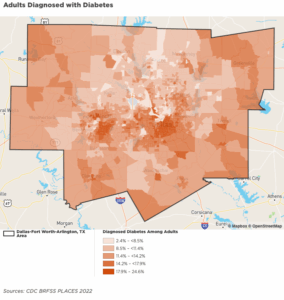
Follow the thumbnail above to view the Lung/bronchus death rate with Dallas-Fort Worth Metropolitan. You can toggle between maps and mouse over regions to view areas dedicated to parks of counties of DFW and Texas.
Chronic kidney disease (CKD) is a condition in which the kidneys are damaged and can’t filter blood as well as they should. Because of this, excess fluid and waste remain in the body and may cause health problems such as heart disease.More than 1 in 7 U.S. adults—about 35.5 million people—are estimated to have CKD. As many as 9 in 10 adults with CKD do not know they have it, and about 1 in 3 adults with severe CKD do not know they have CKD.
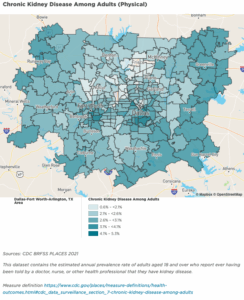
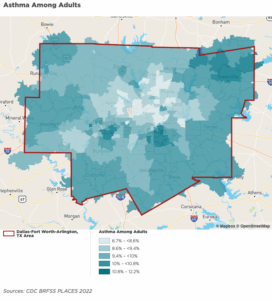
Follow the thumbnail above to view adults with asthma with Dallas-Fort Worth Metropolitan. You can toggle between maps and mouse over regions to view adults with asthma of counties of DFW and Texas.
Overall, the number of U.S. adults who currently have asthma increased from 14.0 million (6.9%) in 2001 to 20.3 million (8.0%) in 2021. In 2023, the prevalence of current asthma was highest among adults below 100% of the poverty threshold (12.5%).